How to Make a Profitable Exit Strategy When Buying a Home
18 October 2026
Most people buy a home with their eyes fixed on the front door. They study the kitchen, the light in the living room, the distance to the school. What they rarely study is the back door, the one they will walk through years later when they sell. That is where profit lives or dies, and it is decided long before the first mortgage payment is made.
An exit strategy is not a prediction. You cannot know the future of a neighborhood, a job market, or an interest rate cycle. What you can do is buy in a way that keeps your options open, so that when the time comes to leave, you leave with money in your pocket rather than a loss on your ledger. This article is about building that optionality into the purchase itself.

Why the Exit Begins at the Purchase
The profit on a home sale is not created on the day you list it. It is created on the day you buy it, and then protected through every year you own it. Think of it as a ledger with two columns. On one side sits everything you pay: the purchase price, closing costs, loan fees, interest, property taxes, insurance, maintenance, and the cost of selling. On the other side sits what you receive: the sale price, minus those selling costs. The gap between the two columns is your profit, and the widest lever you control is the price you pay at the start.This is why the most successful sellers are often the most disciplined buyers. They do not buy the best house on the street at a premium. They buy the house that will appeal to the widest range of future buyers at a price that leaves room for appreciation. They think about who will want this home in five, ten, or fifteen years, and they pay attention to the features that cannot be changed: location, lot, layout, and light.
A simple example makes the point. Two buyers purchase similar homes in the same town for the same price. One buys on a quiet street with mature trees and a flexible floor plan. The other buys on a busy road with a chopped-up layout that cannot be fixed without major expense. Ten years later, the first home sells quickly and above asking. The second sits on the market, and the owner accepts a lower offer to end the waiting. Same town, same era, same starting price, very different exits. The difference was baked in at purchase.
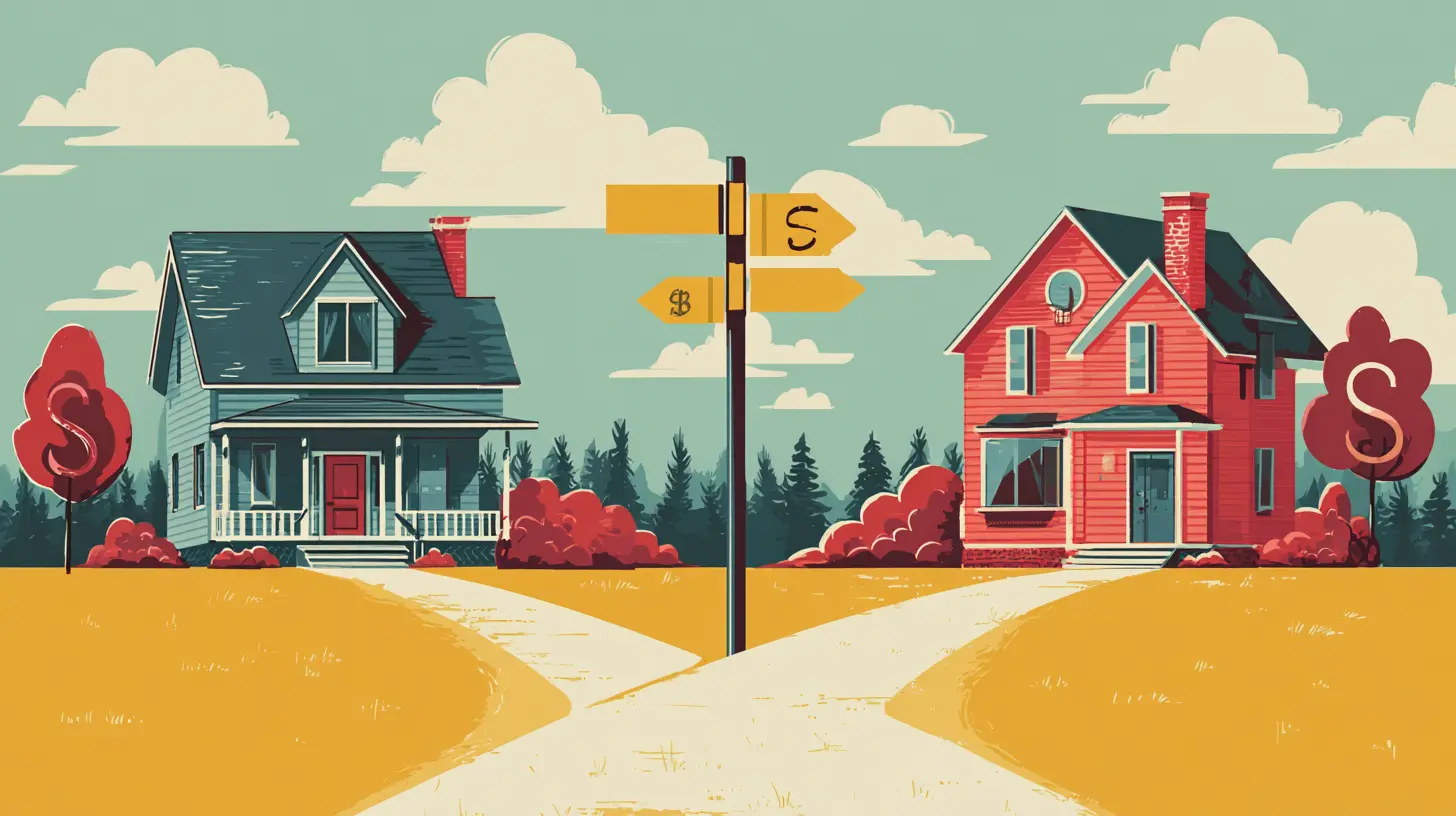
The Anatomy of a Profitable Exit
Before you can plan an exit, you need to know what profit actually means in a home sale. It is not simply the sale price minus the purchase price. That number flatters almost everyone and misleads almost everyone.A more honest calculation looks like this: take the sale price, subtract selling costs such as agent commissions and transfer fees, subtract the remaining mortgage balance, and subtract the total of every dollar you have put into the home over the years, including your down payment, principal payments, interest, taxes, insurance, and capital improvements. What remains is your true gain. Many owners are surprised by how modest that number is, especially in the early years when interest and transaction costs dominate.
This is why the holding period matters so much. In the first few years, the cost of buying and selling can swallow most of the appreciation. The longer you hold, the more those one-time costs are spread across years of ownership and the more equity you build. A common rule of thumb, though not a guarantee, is that a home needs several years of ownership before a sale reliably nets a profit after costs. Treat that as a planning assumption, not a promise.
There is also the question of opportunity cost. Money tied up in a down payment and equity could have been invested elsewhere. A home that appreciates modestly may still be a fine place to live, but it may not beat a diversified portfolio over the same period. The point is not to discourage homeownership. It is to be honest about what kind of asset you are buying and to plan the exit around realistic expectations rather than hopeful ones.

Choosing the Right Property for a Future Sale
The property you choose determines the size of your future buyer pool. A large buyer pool means competition, speed, and price strength. A narrow buyer pool means dependence on a single type of purchaser and vulnerability to shifts in that group's preferences.Location as the First Filter
Location is the one thing you cannot renovate. You can replace a roof, remodel a kitchen, and repaint every wall, but you cannot move the house. When you evaluate a location, ask who will want to live there in a decade. Is the neighborhood improving or declining? Are there employers, transit, schools, and amenities that will still matter? Is there a risk of new construction that could flood the market with similar homes?A useful exercise is to imagine three different future buyers and ask whether each would consider your home. A young family, a downsizing retiree, and a remote worker may have very different needs. The more of them your home can serve, the more resilient your exit.
Layout and Light
Buyers forgive cosmetics. They struggle to forgive layout. A dated kitchen can be updated with a modest budget. A bedroom that can only be reached through another bedroom cannot be fixed without moving walls. Dark rooms with small windows are a permanent discount. When you buy, favor flexible floor plans, sensible room proportions, and natural light. These features cost nothing to maintain and pay you back at sale.The Premium Trap
There is a temptation to buy the most expensive house on the street, the one with the best finishes and the largest footprint. This is often a mistake. The most expensive home in a neighborhood tends to appreciate more slowly because its price is anchored by the surrounding homes, not lifted by them. The least expensive home in a strong neighborhood has more room to rise as the area improves. Buy the modest house on the good street, not the grand house on the struggling one.
Financing Decisions That Protect Your Exit
The way you finance a purchase shapes the exit as much as the property itself. A loan that is cheap today can become a trap tomorrow if it is difficult to assume, expensive to refinance, or loaded with penalties.Fixed Versus Adjustable
A fixed-rate mortgage offers certainty. You know your payment for the life of the loan, which makes it easier to plan a long hold. An adjustable-rate mortgage often starts lower but resets after a set period. If you plan to sell before the first reset, an adjustable loan can make sense and save money. If you might stay longer, the reset risk can erode the equity you hoped to capture. The right choice depends on how confident you are in your timeline, and confidence should be based on evidence, not optimism.Prepayment Penalties and Portability
Read the fine print for prepayment penalties, which charge you for paying off the loan early. Since selling usually means paying off the loan, a penalty can quietly reduce your profit. Also check whether the loan is assumable, meaning a buyer could take it over. In a high-rate environment, an assumable low-rate loan can be a powerful selling point and a genuine advantage in a slow market.The Down Payment Balance
A larger down payment lowers your monthly cost and the interest you pay over time, but it also ties up capital that could be used elsewhere. A smaller down payment preserves liquidity but may require mortgage insurance and leaves less equity cushion if prices dip. There is no universal right answer. Consider your job stability, your emergency fund, and how long you intend to stay. The goal is a payment you can sustain through a downturn without being forced to sell at the worst possible moment.The Costs You Must Count Before You Sell
Sellers are often shocked by how much of the sale price they never see. Planning for these costs at purchase prevents the unpleasant surprise of a smaller check than expected.The major costs typically include agent commissions, which are negotiable but substantial, transfer taxes, title and escrow fees, and any repairs the buyer negotiates after inspection. There may also be prorated property taxes and, in some cases, capital gains taxes on the profit above the exclusion thresholds for a primary residence. The exclusion rules are specific and change over time, so confirm the current limits with a tax professional before you rely on them.
A practical approach is to set aside a realistic percentage of the expected sale price for selling costs and to keep a repair reserve. If you plan to sell in a decade, you can estimate these costs today and revisit them every few years. The number will change, but the habit of planning for it will not.
Timing the Exit Without Guessing the Market
Nobody can reliably call the top of a housing market. Anyone who claims otherwise is selling something. What you can do is recognize the conditions that favor a sale and the conditions that favor patience.Signals That Favor Selling
Strong buyer demand, low inventory, rising prices, and quick sales in your neighborhood are all favorable. So is a personal situation that makes moving easy, such as a job change or a planned downsizing. When demand is high, your buyer pool is wide and your negotiating position is strong.Signals That Favor Waiting
Rising interest rates can cool demand and stretch your time on market. A wave of new construction nearby can add competition. A local employer closing or a major employer leaving can weaken the area. If your timeline is flexible, waiting through a soft patch is often wiser than selling into it.Life Events Over Market Timing
The most reliable exit trigger is usually a life event, not a market signal. A growing family, a new job, a retirement, or a divorce will force a decision regardless of the market. This is why buying a home you can afford to hold through a downturn is so important. If you are never forced to sell, you never have to sell at a bad time.Renovations That Pay and Renovations That Do Not
Not all improvements are equal. Some add value at sale, some merely make the home more pleasant to live in, and some actually reduce your return because they are too personal or too expensive for the neighborhood.Improvements that tend to pay back well include kitchen updates that improve function without overspending, bathroom refreshes, improved energy efficiency, and structural fixes such as a new roof or updated wiring. These address buyer concerns and reduce the list of issues that can be negotiated down after inspection.
Improvements that often fail to pay back include luxury additions that price the home above its neighborhood, highly personalized design choices, swimming pools in markets where buyers see them as a liability, and expensive landscaping that requires constant maintenance. Before you renovate, ask whether the change will appeal to the broadest set of buyers or only to you. If it is only for you, enjoy it, but do not count it as an investment.
Common Mistakes and Misconceptions
A few recurring errors sink more exits than any market downturn.The first is buying at the top of your budget. It feels safe because the bank approved it, but it leaves no room for a rate change, a repair, or a period of unemployment. The second is ignoring the resale profile of the home because you plan to stay forever. Plans change, and the buyer you become in ten years may not be the buyer you are today. The third is treating appreciation as guaranteed. It is not. Home prices can fall and stay flat for years.
A common misconception is that any renovation adds value. In truth, value is set by the market, not by your receipts. Another is that selling costs are trivial. They are not, and they should be part of your math from day one. A third is that a hot market will always bail you out. Hot markets cool, and the homes that suffer most are those that were overpriced or poorly located to begin with.
Bringing It All Together
A profitable exit is not an accident. It is the result of a purchase made with the back door in mind. Choose a location and layout that will serve a wide buyer pool. Finance the home so that you are never forced to sell at a bad time. Count the true costs of buying, holding, and selling before you sign. Renovate for function and broad appeal rather than personal taste. And time your exit around your life and the market's conditions, not around a prediction you cannot make.The home you buy today is the home someone else will buy from you later. Treat that future buyer as a partner in your planning, and the profit you hope for becomes far more likely to arrive.
all images in this post were generated using AI tools
Category:
Renting Vs BuyingAuthor:

Julia Phillips