How to Spot Hidden Money Leaks in Your Spending
27 August 2026
Let's be honest. You check your bank account on the first of the month, feel pretty good about your balance, and then by the twenty-eighth, you are doing mental gymnastics to justify why you can't afford takeout. The math isn't adding up, and you know it. You aren't living large. You aren't buying designer bags. Yet somehow, there is a black hole in your checking account that swallows cash with the precision of a professional pickpocket.
The problem is rarely the big purchases. A car, a vacation, a new HVAC system. Those are visible. You plan for them, or you feel the pain of them. The real damage comes from the silent, recurring, and often embarrassing leaks that drain your finances drop by drop. This is not about skipping your latte. That advice is tired and mostly useless. This is about finding the structural flaws in your personal economy that you have normalized over time.
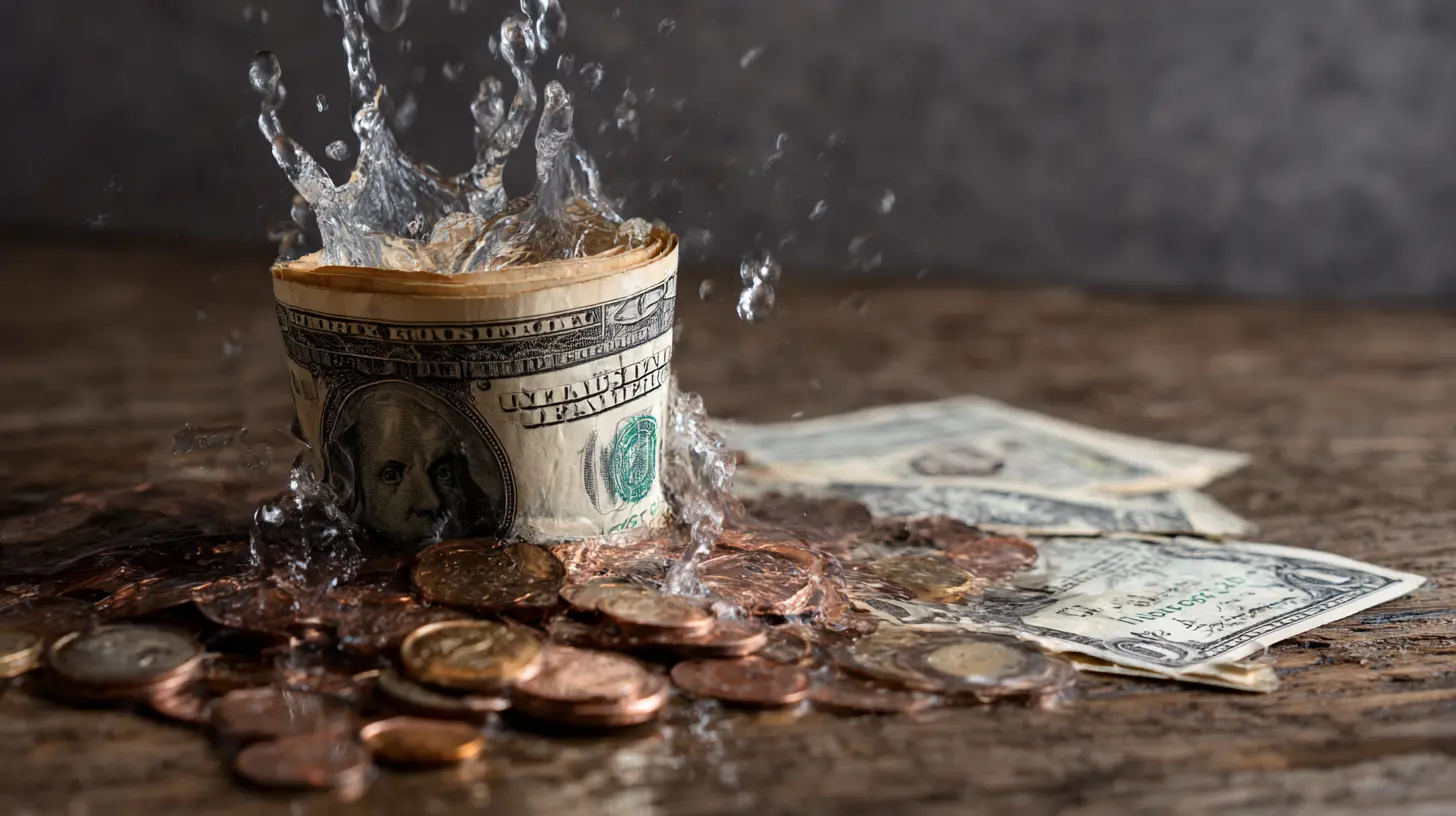
You need to stop looking at your spending as a series of individual choices and start looking at it as a system. If the system has holes, it doesn't matter how much water you pour in. Here is how you find those holes, patch them up, and stop treating your bank account like a sieve.
The Subscription Graveyard
You probably have a good handle on Netflix and Spotify. But what about the app you downloaded for a one-month free trial of a meditation service in January and forgot to cancel? What about the cloud storage backup for a computer you no longer own? What about the monthly fee for a fitness app that you haven't opened since the last time you went to the gym, which was also never?This is the most common leak, but it is also the most deceptive. We talk about "subscription fatigue," but the real issue is not that we have too many subscriptions. It is that we have too many forgotten ones.
Why You Do Not Notice Them
The human brain is wired to ignore consistent, low-level stimuli. This is called habituation. The ticking of a clock, the hum of a refrigerator, and the $9.99 charge for a "productivity suite" all fade into the background. The charge is small enough to avoid triggering your fraud alert, but it is regular enough to be a permanent drain.The fix is not just "canceling." The fix is a quarterly audit. Print out your last three months of bank statements and go line by line. Highlight anything that repeats. You will find charges from companies you do not remember. I once found a charge for a "professional networking" site that I had signed up for in 2016 to look at a prospective client's profile. I had been paying for four years without logging in once. That was nearly $300 down the drain for absolutely nothing.
The Deceptive Free Trial
Let's talk about free trials. They are designed to be forgotten. The entire business model relies on your intention to cancel but your failure to follow through. The trick is not to rely on memory. The trick is to cancel the trial immediately after you sign up. You do not lose access. You lose the auto-renewal. Most services allow you to keep the premium features until the trial period ends, even if you cancel the subscription in your settings. Do that. Always.If you cannot cancel immediately, set a calendar reminder for three days before the trial ends. Not the day it ends, because that is when they make it hard to navigate the cancellation page. Do not fight the system. Outsmart it by canceling on day one.
The "Small Stuff" Tax
We all have a friend who says, "I don't know where my money goes." This friend also buys a bottle of water at the gas station every morning, uses an ATM at a casino because it is convenient, and pays a $2.50 "convenience fee" to buy concert tickets online instead of walking to the box office.This is the "small stuff tax." It is the premium you pay for not paying attention. It is not about the cost of the item itself. It is about the markup you accept for the sake of convenience or impulse.
The Convenience Fee Fallacy
You are busy. I get it. But paying a 15% surcharge on everything because you are in a hurry is a choice. The problem is that you are not consciously making that choice. You are just reacting to hunger, thirst, or boredom.Let's compare two scenarios. You are out running errands. You forgot your water bottle. You are thirsty. You go into a convenience store and buy a bottle of water for $2.50. That is a leak. Alternatively, you walk into a drugstore and buy the same bottle for $1.50. That is also a leak, just a smaller one. The real solution is keeping a reusable bottle in your car. But if you are going to leak, leak slowly.
The deeper issue is the "convenience fee" on digital transactions. Ticketing sites, food delivery apps, and even some online retailers add fees that are pure profit for them and pure loss for you. The best practice here is to ask one question before any purchase: "Am I paying for the product, or am I paying for the ability to not think about this?"
The Impulse Buy Loop
Impulse buys are not random. They are triggered by emotional states. Boredom, stress, and fatigue are the primary drivers. When you are tired, your willpower is depleted. This is why the checkout aisle is stocked with candy and why Amazon's "Buy Now" button is so dangerous.To stop this leak, you have to insert a speed bump between the urge and the action. Unsave your credit card information from your browser. Force yourself to type in the numbers every time. That extra thirty seconds of friction is often enough to make you realize that you do not actually need a novelty-shaped ice cube tray at 11 p.m. on a Tuesday.
The Bank Fee Blind Spot
This is the leak that you probably think does not apply to you, and that is exactly why it is leaking. Bank fees are not just for people who overdraft. There are monthly maintenance fees, minimum balance fees, and out-of-network ATM fees.The "Free" Checking Account Reality
Many checking accounts are only "free" if you have a direct deposit above a certain amount or if you keep a minimum balance. If your balance dips below that threshold for one day, you get hit with a fee. This is not a leak; this is a piranha.The expert move here is to switch to a credit union or an online bank. Most online banks have no physical branches, which means they have lower overhead, and they pass those savings on to you. They do not charge maintenance fees, and they reimburse ATM fees globally. There is no downside except for cash deposits, which are a hassle. But if you are rarely depositing cash, this is a no-brainer.
The Overdraft Protection Scam
Overdraft protection sounds helpful. It sounds like the bank is looking out for you. It is not. When you opt into overdraft protection, you are agreeing to let the bank cover your purchase for a fee of around $35. The problem is that they process transactions in a specific order, often from largest to smallest, to maximize the number of times you can trigger that fee.If you have $50 in your account and you buy a coffee for $4, a sandwich for $10, and then a pair of shoes for $60, the bank will process the shoes first. That makes your account negative, triggering a fee. Then they process the sandwich, triggering another fee. Then the coffee, triggering a third fee. You just paid $105 in fees for a $74 spending spree. Opt out of overdraft coverage. Let the card decline. The embarrassment of a declined card is cheaper than the fee.
The "Loyalty" Discount That Isn't
We are conditioned to think that loyalty is rewarded. In the financial world, it rarely is. Your insurance company, your cable provider, and your phone carrier are all betting that you will not shop around.The Lazy Tax
This is the difference between what you are paying and what a new customer pays. Companies know that acquiring a new customer is expensive, so they offer aggressive discounts to new sign-ups. They also know that existing customers rarely leave because it is a hassle to switch. That hassle is the "lazy tax."The fix is not to switch every year. That is exhausting. The fix is to call your provider once a year and ask for the retention department. Tell them you are thinking about leaving because you saw a better offer. You do not need to have a specific offer in hand. You just need to ask. The retention agent has the authority to lower your bill. They will often apply a "loyalty credit" that lasts for six to twelve months. You have to do this annually. It takes fifteen minutes. If you make $50 an hour, this is the highest-return activity you can do.
The Bundling Illusion
Bundling services can save you money, but only if you actually use all the parts. If you bundle internet, cable, and a landline because it looks cheaper on paper, but you never watch cable and have never plugged in a landline phone, you are not saving. You are paying for features you do not use. Compare the bundle price to the price of just the internet service. Often, the standalone internet is cheaper, and you can use a streaming service for the content.The Grocery Store War Zone
Food is a necessity. But the way you buy food is a minefield of hidden leaks. The biggest one is not the food itself. It is the waste.The Spoilage Equation
According to general estimates, the average household throws away a significant portion of the food it buys. This is not just the cost of the food. It is the cost of the time you spent shopping and the gas you used to get there. You are literally throwing money into the trash.The root cause is overbuying. You shop when you are hungry, or you buy in bulk because it is a "better deal." But a bulk pack of avocados is not a deal if you only eat one before they turn to mush. The best practice here is to plan your meals for the week, not loosely, but specifically. If you buy spinach, you need to know exactly which meal it is going into. If you cannot assign a specific meal to a specific ingredient, do not buy it.
The "Prepared Food" Premium
Buying a rotisserie chicken is a great deal. Buying pre-cut vegetables is a moderate markup. Buying a full meal from the deli section is a massive markup. The hidden leak here is the "time tax." You are paying for someone else to do the labor. Sometimes that is worth it. If you have a busy week, buying pre-cut vegetables might save you from ordering takeout, which is more expensive. The key is to compare the prepared food cost to the takeout cost, not to the raw ingredient cost. You have to choose your leaks. You cannot plug them all.
The Maintenance Deferral Trap
This is the most expensive leak on this list because it is invisible until it is catastrophic. It is the habit of deferring maintenance on your home, your car, and your body.The $20 Oil Change vs. The $5,000 Engine
If you skip an oil change to save $50, you are not saving money. You are borrowing against the life of your engine. The same logic applies to your home's HVAC system. Replacing a $20 air filter every three months is a nuisance. Replacing a $10,000 compressor is a crisis.This leak is not in your monthly spending. It is in your future spending. You are creating a liability that will come due with interest. The best practice is to set up a sinking fund for maintenance. Put $50 a month into a separate savings account for "repairs." When the water heater dies, you have the cash. You avoid the credit card debt and the high-interest loan. This turns an unpredictable leak into a predictable expense.
The "Cheap" Fallacy
Buying the cheapest version of a tool, a tire, or a pair of shoes is often more expensive in the long run. This is the "buy once, cry once" principle. If you buy a $30 blender and it breaks in six months, you have paid $60 a year for the privilege of owning a blender. If you buy a $100 blender that lasts five years, you have paid $20 a year. The hidden leak is the replacement cost and the time spent dealing with the failure.However, this does not mean you should buy the most expensive version of everything. It means you should buy the appropriate quality for the frequency of use. If you use a power drill once a year to hang a picture, buy the cheap one. If you are a contractor, buy the premium one. Know your usage rate.
The Digital Wallet Disconnect
Cash is tangible. When you hand over a $20 bill, you feel the loss. A credit card is abstract. A digital wallet on your phone is even more abstract. You are just tapping a screen.The Pain of Paying
Behavioral economists call this the "pain of paying." The more friction there is in a transaction, the more painful it is, and the less likely you are to spend. Credit cards remove the pain. Digital wallets remove it entirely. You are essentially playing with Monopoly money until the bill comes due.To spot leaks here, you have to artificially reintroduce the pain. This does not mean switching to cash for everything. That is impractical. It means checking your spending daily. Not weekly, not monthly. Daily. Open your banking app and look at what you spent today. This takes two minutes. It forces you to confront the choices you made. This simple act of daily awareness will reduce your spending by a noticeable margin because you will start to feel the sting of the purchase in real time.
The Percentage vs. Absolute Value Trap
This is a cognitive bias that causes a specific type of leak. You see a $100 item on sale for $80. You think, "I saved $20." You drive across town to buy it, spending $5 in gas and an hour of your time. You did not save $20. You saved $15 and spent an hour of your life.The inverse is also true. You buy a $2,000 laptop and add an $80 extended warranty without thinking. The $80 is only 4% of the laptop's price, so it feels insignificant. But $80 is $80. You would not throw an $80 bill in the trash. The percentage framing makes you blind to the absolute value.
The Anchor Effect
Retailers are masters of the anchor effect. They show you a "was" price that is inflated, so the "now" price looks like a bargain. The leak is not the price you pay. It is the false sense of urgency and value that makes you buy something you did not plan to buy. The fix is to ignore the "was" price entirely. Ask yourself one question: "What is this worth to me, right now, ignoring the discount?" If the answer is less than the selling price, walk away.The Final Leak: Your Own Optimism
The biggest leak is the belief that you will "start budgeting next month" or that "this was a one-time expense." It is never a one-time expense. Life is a series of one-time expenses that happen repeatedly.The most effective way to stop the leaks is to automate your savings. Pay yourself first. Set up an automatic transfer to a savings account on payday, before you can spend it. This is not budgeting. This is hiding money from yourself. If you do not see it, you cannot spend it. This forces your spending to adapt to your savings, rather than the other way around.
You do not need a complex spreadsheet. You need to look at the small, recurring, and forgotten charges. Cancel the subscriptions you do not use. Call your providers and negotiate. Pay attention to the fees. Stop paying for convenience you do not need. Maintain your stuff before it breaks. And most importantly, check your accounts daily.
The money is not gone. It is just hiding in plain sight. Go find it.
all images in this post were generated using AI tools
Category:
Financial CheckupAuthor:

Julia Phillips
Discussion
rate this article
2 comments
Daniel Smith
Great tips for identifying spending leaks!
September 15, 2026 at 10:51 PM
Julia Phillips
Glad you found the tips helpful! Spotting those leaks can make a big difference.
Teagan Scott
If money could talk, it would probably whisper, "Hey, I'm over here!" Finding those sneaky spending leaks is like hunting for socks in the dryer... only to discover it was in the cat's paws all along!
September 2, 2026 at 12:16 PM