The Impact of IoT Devices on Personal Banking Security
19 October 2026
Your bank spends millions on firewalls, encryption, and fraud detection. None of that matters if your smart speaker is listening when you read your card number aloud, or if your fitness tracker shares a Bluetooth connection with the phone that holds your banking app. The internet of things has quietly redrawn the perimeter of personal banking security, and most people never noticed the line move.
This article examines how connected devices change the risk profile of personal banking, where the real threats sit, and what you can do about them without turning your home into a bunker.

What Counts as an IoT Device in a Banking Context
The label "IoT" gets stretched in every direction, so it helps to be precise. In the context of personal banking security, an IoT device is any internet-connected device in your personal environment that is not a conventional computer or smartphone but still holds, transmits, or can intercept financial data or the credentials that protect it. That includes smart speakers, security cameras, video doorbells, smart thermostats, connected cars, fitness wearables, smart TVs, voice assistants embedded in appliances, and even connected toys.The smartphone deserves special mention. It is technically not an IoT device in the classic sense, but it is the hub through which most IoT devices reach your banking world. A weakness in any connected device that shares your home network or your phone's Bluetooth radio can become a pathway toward your accounts.
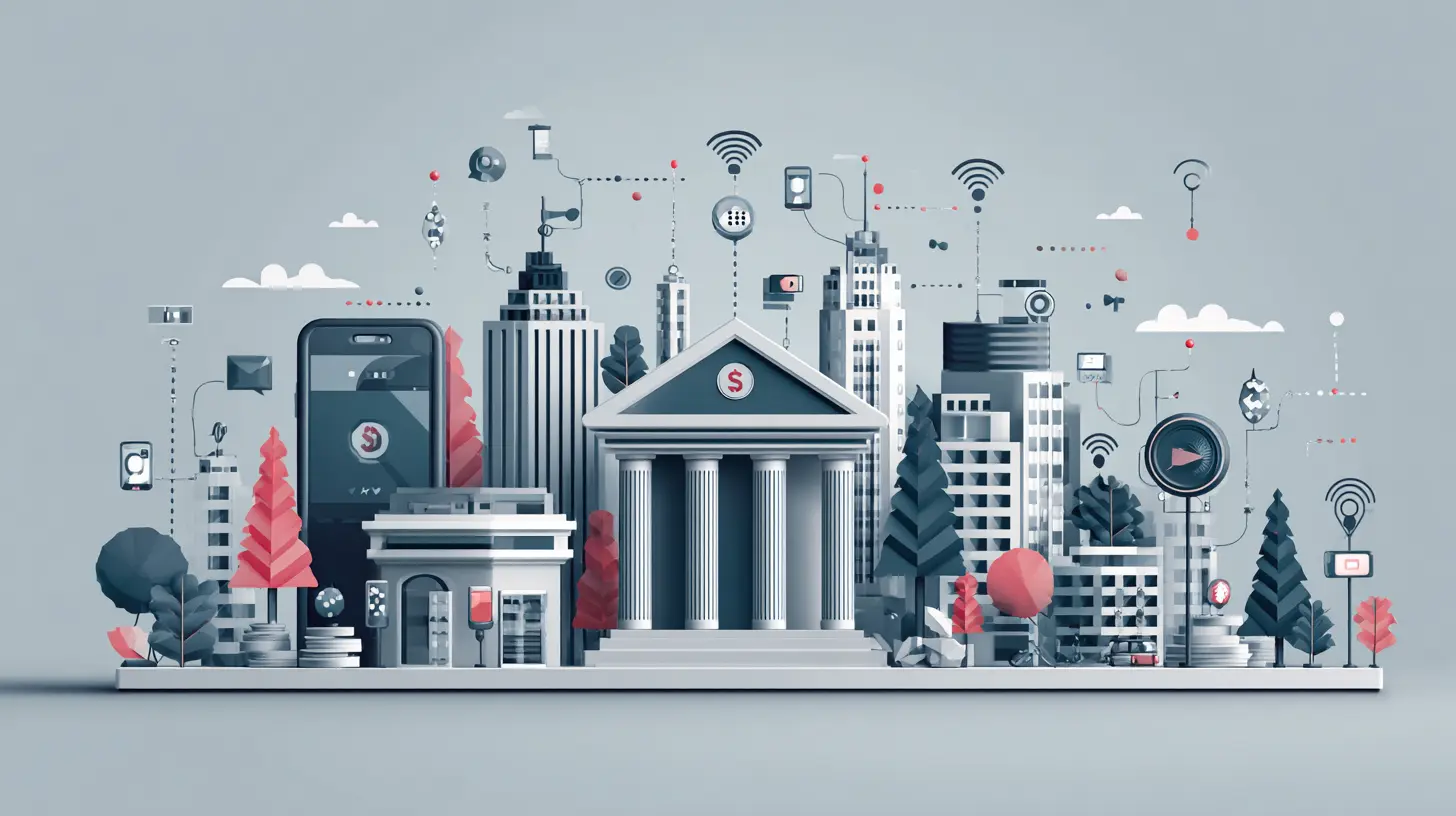
The Real Threat Model: It Is Rarely a Direct Attack on Your Bank
Headlines about bank breaches train people to think of security as a fortress problem: attackers go after the bank, the bank defends itself, customers watch from the sidelines. IoT changes that picture. The attacker rarely targets your bank directly. They target the weakest connected device in your home, use it as a foothold, and work outward toward the accounts that hold your money.Three mechanisms account for most real-world risk.
First, credential exposure through voice and ambient data. Smart speakers and voice assistants are designed to listen. Even when they are not recording, they process audio locally or in the cloud depending on the device and settings. If you pay a bill by voice, read a card number aloud, or discuss account details near an always-on microphone, you create a data trail that did not exist before.
Second, network lateral movement. Most home routers treat every connected device as trusted. A compromised smart bulb or cheap security camera becomes a launchpad. From there, an attacker can scan the local network, intercept unencrypted traffic, or attempt to reach the smartphone that holds your banking app. This is why security professionals talk about segmentation: the goal is to keep the weakest device from sitting on the same network as the most sensitive one.
Third, identity and account linkage. Connected devices often require accounts, cloud logins, and app permissions. A fitness app linked to your bank for rewards, a smart TV signed in with the same email and password you use elsewhere, a connected car app that stores payment details for charging or fuel: each linkage is a bridge. When one bridge collapses, the attacker walks across it.
Why IoT Devices Are Structurally Weaker Than Phones and Computers
This is the part most consumers miss. The weakness is not accidental. It is built into the economics of the category.IoT devices are manufactured at low margins and sold in enormous volumes. Security updates are expensive to develop, test, and distribute. Many manufacturers stop supporting a device long before its useful life ends. A security camera bought in 2021 may still work perfectly in 2027 while receiving no patches at all. Compare that to a smartphone, where you expect years of operating system updates and where the platform vendor has a strong incentive to keep the device secure because it holds your identity.
There is also a visibility problem. Your phone tells you when an app requests the camera. Your smart plug does not tell you much of anything. The average household has dozens of connected devices, and few people can list them all, let alone audit their firmware versions or account permissions. Attackers exploit that blindness.
Finally, defaults are hostile. Factory passwords, open ports, and permissive cloud sharing settings are common. A device that works out of the box is a device that may be exposed out of the box.
The Smart Speaker Problem: Convenience Versus Confidentiality
Voice assistants are the most visible IoT banking risk, and the debate around them is genuinely nuanced.The convenience case is real. Voice-initiated transfers, balance checks, and bill payments reduce friction, and for people with mobility limitations they can be genuinely empowering. Banks have invested in voice banking for exactly this reason.
The confidentiality case is equally real. Voice interfaces create two distinct exposures. The first is the obvious one: speaking sensitive information within range of a microphone. The second is subtler. Voice assistants rely on wake words, and false activations happen. A device that mishears a wake word and begins recording captures whatever is happening in the room, including conversations about money, account numbers, and passwords.
The practical mitigation is not to ban voice assistants. It is to separate the functions. Use voice banking only for low-stakes actions such as checking a balance. Never read full card numbers, PINs, or passwords aloud. Review and delete voice recordings stored in the assistant's account settings. And check whether your bank's voice feature requires a secondary confirmation on your phone; if it does, that confirmation is your real security control, not the voice itself.
Connected Cars and Wearables: The Overlooked Channels
Connected cars now store payment methods for charging networks, tolls, parking, and in-car commerce. They also collect location history that reveals where you shop, when you travel, and which branches you visit. A compromised car app account can expose a surprising amount of financial behavior. The car itself is a computer on wheels with a cellular connection, and its software update cadence is often far behind a phone's.Wearables add a different wrinkle. Fitness trackers and smartwatches increasingly support contactless payments. That is convenient, but it means the device now holds tokenized card credentials. Tokenization helps: the actual card number is not stored on the device, and the bank can revoke the token remotely. The risk shifts to the account layer. If your wearable account is protected by a weak password or no multi-factor authentication, an attacker may be able to add the device to a new phone or re-provision the payment credential.
The lesson is consistent: with IoT, the account protecting the device often matters more than the device itself.
Common Mistakes and Misconceptions
Several beliefs sound reasonable but lead people astray."My bank's app is secure, so I am secure." The app may be well built. The phone it runs on is only as safe as the network it joins and the devices it trusts. A compromised home network can undermine a strong app.
"IoT devices are too small to matter to attackers." Attackers do not need your smart bulb to be valuable. They need it to be reachable. Botnets built from routers, cameras, and plugs have caused some of the largest internet disruptions on record. Your device's value to an attacker is its connectivity, not its function.
"Changing the default password is enough." It is necessary but not sufficient. Firmware updates, network separation, and account hygiene matter just as much.
"Two-factor authentication solves everything." Two-factor authentication is powerful, but SMS-based codes can be intercepted through SIM swap attacks, and push-based approvals can be fatigued into acceptance. Prefer authenticator apps or hardware security keys where your bank supports them.
"If I did not authorize it, the bank must cover it." Consumer protection rules vary by jurisdiction and by payment type. Unauthorized transfers are often reimbursed, but authorized push payments, where you are tricked into sending money yourself, frequently are not. IoT-enabled social engineering, such as a caller spoofing your bank after compromising your smart home data, can push you into exactly that category.
A Practical Defense Plan for Households
You do not need enterprise-grade security. You need a handful of habits applied consistently.Inventory your connected devices
List every device on your home network that connects to the internet. Your router's admin page usually shows connected devices. If you cannot identify a device, investigate it. Unknown devices are the first thing to check.Segment your network
Most modern routers support a guest network. Put smart bulbs, plugs, cameras, and TVs on the guest network or a dedicated IoT network, and keep phones, laptops, and anything used for banking on the main network. This single step blunts lateral movement more than almost anything else a household can do. The trade-off is minor: some devices lose local discovery features, and you may need to reconnect them.Patch aggressively, and know when support ends
Enable automatic firmware updates where available. Track the support lifecycle of devices you rely on. When a manufacturer stops issuing updates, treat the device as a liability and replace it or isolate it. A camera that still streams video but has not been patched in three years is a door left unlocked.Harden accounts and permissions
Use a password manager to give every device account a unique password. Enable multi-factor authentication on the accounts that matter most: email, banking, and any app that can move money or add payment credentials. Review third-party app permissions periodically and revoke access for anything you no longer use.Separate banking from the ambient environment
Do your banking on a device you control, on a network you trust, away from always-on microphones. If you must use voice banking, restrict it to balance checks. Never speak full credentials aloud. Keep your banking app's notifications on so you see transactions as they happen.Watch for the human channel
The most sophisticated IoT-enabled fraud does not attack technology directly. It gathers context, such as your travel plans from a calendar synced to a smart display or your recent purchases from a compromised retail account, and uses it to make a convincing call or message. Treat unexpected contact about your money as hostile until you verify it through a channel you initiated, such as calling the number on your card.
Where the Industry Is Heading, and What It Means for You
Regulators in several jurisdictions are tightening rules around connected device security, requiring unique default passwords and clearer disclosure of support periods. Banks are experimenting with device-bound authentication, where a login is tied to a specific registered device. Both trends help, but neither removes the need for household discipline.The deeper shift is architectural. Banks are moving toward continuous authentication, evaluating signals such as device health, location, and behavior patterns. In that world, a compromised IoT device that shares your network may not directly steal money, but it can degrade the trust signals your bank uses to approve transactions, leading to friction, step-up verification, or declined payments. Security and convenience will increasingly trade off against each other, and the household that manages its devices well will experience less of both risk and friction.
The Bottom Line
IoT devices do not make personal banking inherently unsafe. They make it conditionally safe, dependent on choices most people have never been asked to make. The bank's defenses remain strong. The variable is the perimeter around your accounts, and that perimeter now runs through your living room, your car, and your wrist.Treat connected devices as members of your financial household. Inventory them, isolate them, patch them, and limit what they can hear and reach. None of this requires technical expertise. It requires the same discipline you already apply to your passwords, applied to a larger and quieter surface.
all images in this post were generated using AI tools
Category:
Banking SecurityAuthor:

Julia Phillips