Top Ways Financial Apps Are Revolutionizing Personal Finance
25 October 2026
Personal finance used to be a monthly ritual. You sat down with a shoebox of receipts, a bank statement, and a calculator, and you tried to reconstruct what happened to your money. By the time you finished, the information was already out of date. That gap between what you knew and what was actually true was where most financial mistakes lived. Financial apps have closed that gap, and in doing so they have changed not just how people track money but how they think about it.
This is not a story about shiny interfaces. It is a story about feedback loops, lower friction, and the quiet redistribution of financial capability from institutions to individuals. Below is a close look at the specific ways financial apps are reshaping personal finance, why those changes matter, and where the risks and trade-offs still sit.

The Core Shift: From Periodic Review to Continuous Awareness
The most important change financial apps introduced is not budgeting. It is timing. Traditional personal finance was retrospective. You reviewed last month to plan next month. Apps made the process continuous. A transaction clears, a notification appears, a category updates, and your available balance adjusts in something close to real time.Why does timing matter so much? Because financial decisions are made in the moment, not at the end of the month. The choice to order delivery instead of cooking happens at 7 p.m. on a Tuesday, not during a budgeting session. When your phone shows that you have already spent 80 percent of your dining budget with two weeks left in the month, that information arrives while it can still influence the decision. That is the difference between a budget as a postmortem and a budget as a guardrail.
There is a trade-off here worth naming. Continuous awareness can tip into anxiety. Some people check balances compulsively and feel worse, not better. The fix is not to abandon the tool but to configure it: turn off push notifications for every transaction, set alerts only for thresholds that matter, and schedule a weekly review instead of a daily one. Awareness should serve decisions, not feed worry.

Automated Categorization and the End of Manual Data Entry
Manual expense tracking failed for a simple reason: it required effort at the exact moment people had the least patience for it. Automated categorization removed that barrier. Apps now read transaction descriptions, merchant codes, and historical patterns to sort spending into categories without user input.The practical effect is larger than it sounds. When tracking costs nothing, people actually do it, and when people actually do it, patterns become visible. A freelancer might notice that software subscriptions quietly grew from three to eleven over a year. A household might see that grocery spending crept up after switching stores. These are not dramatic discoveries, but they are the kind of small leaks that compound.
That said, automated categorization is not magic. Merchant names are messy, and small businesses often process payments under names that do not match their storefronts. Most apps let you create rules, for example mapping every transaction from a particular coffee shop to the "coffee" category permanently. Spending ten minutes setting up rules in the first month saves hours of corrections later. The common mistake is expecting perfect automation on day one and giving up when the first few categories look wrong. Treat the first month as a training period for both you and the app.
Real-Time Budgeting That Adapts Instead of Guessing
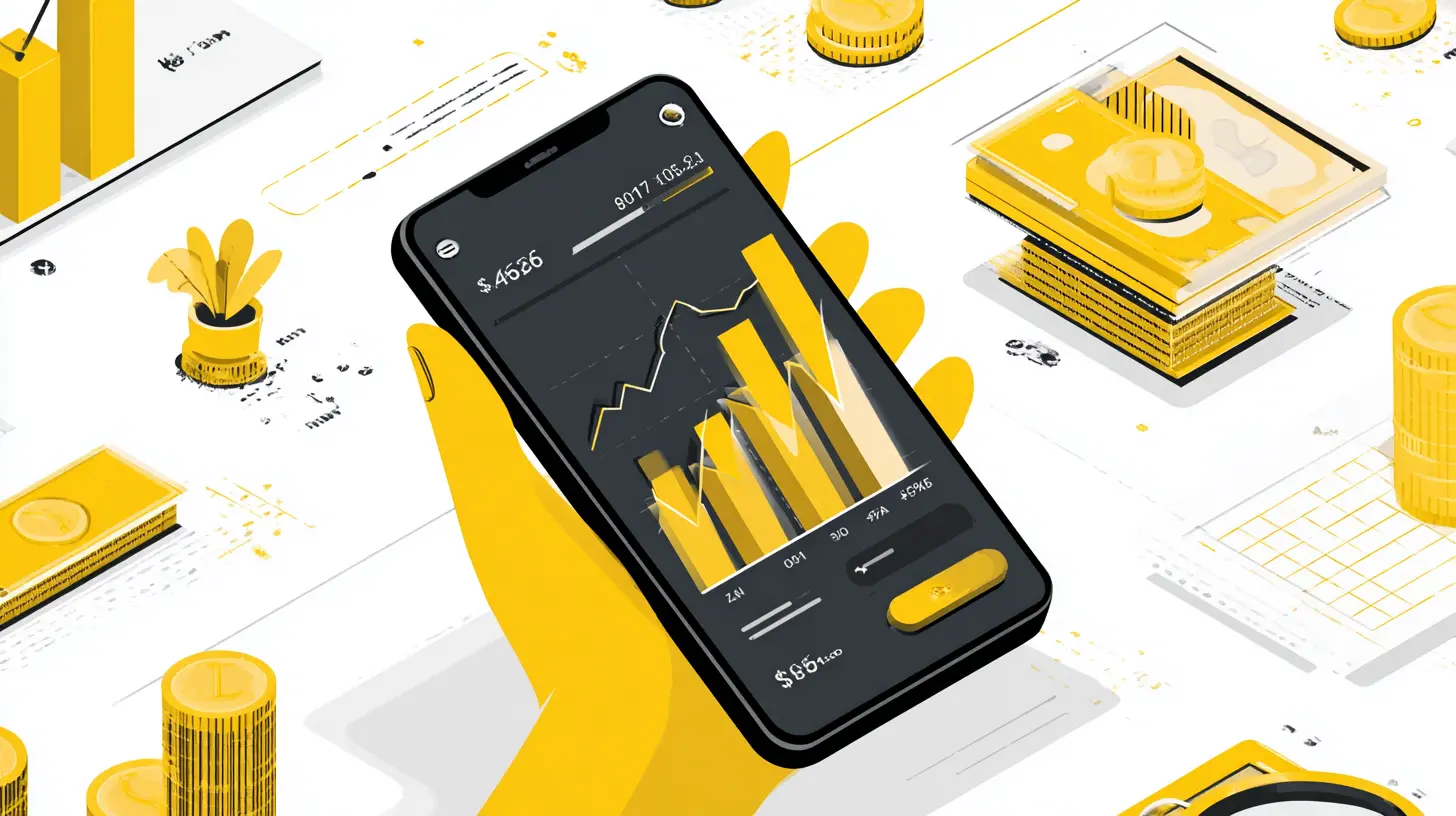
Older budgeting methods asked you to predict the future: estimate your spending, divide it into categories, and hope reality cooperated. Apps flipped the model. Modern budgeting tools start from actual income and actual spending, then adjust as the month unfolds.Two broad approaches dominate, and they suit different personalities. The first is zero-based budgeting, where every dollar is assigned a job at the start of the month. It demands engagement but produces tight control, and apps have made it far less tedious by carrying over balances and flagging unassigned money. The second is adaptive or envelope-style budgeting, where categories flex based on what actually happens. It is more forgiving and better for people with irregular income, such as freelancers or commission-based earners.
Which should you choose? If your income is steady and your main problem is overspending, zero-based budgeting gives you the discipline you need. If your income fluctuates or your main problem is simply not knowing where money goes, adaptive budgeting lowers the barrier to starting. The mistake is copying someone else's system because it worked for them. The right system is the one you will actually maintain during a busy month, not the one that looks best in a screenshot.

Savings Automation: Paying Yourself Before You Can Spend
The classic advice to "pay yourself first" always worked, but it required willpower every payday. Apps turned it into infrastructure. You can set a transfer to savings to run the day after your paycheck lands, split direct deposits so a portion never touches your checking account, and create separate buckets for goals like an emergency fund, a car repair fund, or a vacation.The behavioral logic is sound. Money that is visible in your checking account feels available, and money that feels available gets spent. Moving it automatically removes the moment of choice, and removing the moment of choice is more reliable than winning it repeatedly.
Round-up features, which invest or save the spare change from each purchase, deserve a nuanced look. They are excellent for building the habit of saving because they are painless and constant. But the amounts are small, and the impact depends heavily on how the program handles withdrawals and whether it charges fees. A round-up program that moves a few dollars a month is a starting point, not a strategy. Use it to build the reflex, then add a fixed automatic transfer that does the heavy lifting.
Investment Access and the Decline of Minimums
Not long ago, investing in a diversified portfolio required a brokerage account, a meaningful minimum deposit, and enough confidence to navigate order types and fund selections. Apps compressed that journey into a few taps. Fractional shares let someone invest twenty dollars in a broad index fund. Commission-free trading removed the cost barrier that made small investments pointless.This democratization is genuinely significant. A person who starts investing at twenty-five with small, consistent contributions has an advantage that no amount of stock-picking skill can easily replicate later. Apps made that start possible for people who were previously shut out.
But access without education has a cost. The same apps that made index investing easy also made speculative trading frictionless, and frictionless speculation is where many new investors get hurt. The features that look most exciting, such as leverage, options, and crypto trading, are precisely the ones that require the most experience. A useful rule: use the app's boring features first. Automate contributions into diversified funds, let them run, and treat the exciting features as something to understand thoroughly before touching. If an app's design nudges you toward frequent trading, notice the nudge and resist it.
Credit Monitoring and Score Transparency
Credit scores once felt like a mystery number computed behind closed doors. Apps turned credit into a dashboard. Many now show your score, explain which factors are helping or hurting it, and alert you when a new account appears in your name.The educational value here is underrated. Seeing that credit utilization counts for a large share of your score, and watching your score respond when you pay down a card balance, teaches the mechanics of credit faster than any article. Alerts also provide early warning of identity theft, which matters because the sooner a fraudulent account is caught, the less damage it does.
Keep perspective, though. A credit score is a measure of how you handle borrowed money, not a measure of financial health. Someone can have an excellent score and no savings, or a modest score and a healthy balance sheet. Use score monitoring as one instrument on the panel, not as the destination.
Peer-to-Peer Payments and the Social Side of Money
Payment apps changed the social texture of money. Splitting a dinner bill, paying a roommate for utilities, or sending a friend money for concert tickets now takes seconds. Before these tools, small debts between friends were often awkward, and many were simply forgiven to avoid the conversation. Now the transaction is frictionless and, importantly, documented.There is a subtle benefit beyond convenience: clarity. When every shared expense is recorded, disputes about who owes what shrink. There is also a subtle risk: spending feels less real when it happens through an app. Handing over cash creates a physical sense of loss that a tap does not. The countermeasure is simple. Check your payment app history weekly the way you would check a bank statement, and keep peer payments in your budgeting app so they do not become a blind spot.
Subscription Tracking and the Silent Leak
Recurring charges are the quietest form of overspending because each one is small and each one is automatic. Apps that identify and list subscriptions have become one of the most practical tools in personal finance for exactly this reason. Seeing eleven subscriptions totaling a meaningful monthly sum, laid out on one screen, produces a reaction that no lecture about budgeting can.Why does this work? Because the problem was never ignorance of any single subscription. It was the absence of a consolidated view. Apps supply the view, and the view supplies the motivation. When reviewing subscriptions, sort by annual cost rather than monthly, since a ten-dollar monthly charge reads as one hundred twenty dollars a year, which is the number that actually matters.
Common Mistakes and Misconceptions
A few patterns trip people up repeatedly.Mistaking tracking for progress. A beautifully categorized budget is not the same as saving money. Tracking is diagnosis. The treatment is changing behavior, whether that means automating savings, cutting a subscription, or renegotiating a bill. If you have tracked for three months and nothing has changed, the tool is working but you are not using it.
Connecting every account on day one. Linking everything feels thorough, but it also means granting broad access before you trust the app. Start with one or two accounts, confirm the data is accurate, then expand. Read what data the app collects and whether it sells anonymized information. Free apps have to make money somehow, and the honest ones say how.
Chasing features instead of habits. The best app is the one you open. A simple tool used weekly beats a sophisticated tool abandoned after two weeks. Before switching apps, ask whether the problem is the software or the routine.
Ignoring the security basics. Use a unique password, enable two-factor authentication, and be skeptical of any message asking you to verify account details through a link. Financial apps are generally secure, but the weakest point is usually the human holding the phone.
Assuming automation removes the need for review. Automation handles execution. It does not handle judgment. A monthly review of fifteen minutes catches duplicate charges, forgotten subscriptions, and goals that need adjusting. Automate the doing, schedule the thinking.
Best Practices for Getting Real Value
Set up automatic transfers on payday, before discretionary spending has a chance to absorb the money. Create separate savings buckets for separate goals, because a single lump sum is easy to raid while a labeled fund feels like it belongs to something. Review subscriptions quarterly and cancel anything you have not used since the last review. Use threshold alerts rather than per-transaction notifications so the app informs without nagging. Reconcile your budget against your actual bank statement once a month to catch categorization errors. And revisit your automation settings whenever your income changes, because a savings rate calibrated to an old salary quietly becomes either too aggressive or too timid.The Bigger Picture
Financial apps did not invent good financial habits. Budgeting, saving, and investing are old ideas. What apps changed is the cost of maintaining those habits. They lowered the effort of tracking, removed the friction from saving, shortened the delay between a decision and its consequence, and put institutional-grade visibility into ordinary hands.That shift is genuinely positive, but it is not automatic. A tool amplifies whatever behavior it meets. Pointed at awareness and consistency, it compounds into real security. Pointed at impulse and speculation, it compounds just as efficiently in the other direction. The revolution is real, and the direction it takes is still a choice.
all images in this post were generated using AI tools
Category:
Financial AppsAuthor:

Julia Phillips
Discussion
rate this article
1 comments
Natasha Diaz
Financial apps simplify budgeting, enhance savings, and provide real-time investment insights, empowering users to take control of their finances and make informed decisions easily.
October 25, 2026 at 2:42 AM