What Millennials and Gen Z Need to Know About Renting vs Buying
3 September 2026
The rent versus buy question is one of the most persistent financial dilemmas of our time. For Millennials and Gen Z, it arrives with extra baggage: student loan debt, stagnant wage growth relative to housing costs, a post-pandemic shift in where and how we work, and the lingering memory of watching older siblings or parents lose homes in 2008. The advice you hear is often binary - renting is throwing money away, or buying is a trap. Both statements are oversimplified to the point of being dangerous.
The truth is that the decision is not about which option is universally better. It is about which option is better for your specific financial reality, your career trajectory, your personality, and your long-term goals. This article will walk through the real mechanics of both paths, the hidden costs that rarely make it into casual conversation, and the frameworks you need to make a decision you will not regret in five, ten, or twenty years.

The Emotional Trap of "Throwing Money Away"
Let's address the most common piece of bad advice first. The phrase "renting is throwing money away" is repeated so often that it has become a cultural reflex. It sounds logical on the surface. You pay rent, you get nothing back. You pay a mortgage, you build equity. But this comparison ignores two critical facts.First, rent is not a waste. It is payment for a service: a place to live, maintenance handled by someone else, flexibility to move without penalty, and the freedom from major financial liability. You are not throwing money away any more than you are throwing money away on groceries or a gym membership. You are paying for a roof and the peace of mind that comes with not owning a roof.
Second, a mortgage payment is not purely an investment. In the early years of a typical 30-year fixed mortgage, the vast majority of your payment goes toward interest, property taxes, and insurance. Only a small slice goes toward principal. For example, on a $400,000 home with a 20 percent down payment and a 6.5 percent interest rate, your first year of payments might put roughly $4,000 toward principal while paying over $20,000 in interest, taxes, and insurance. That is not throwing money away, but it is also not the wealth-building machine many people imagine.
The real question is not whether you are building equity. It is whether you are building equity faster than you would build wealth by investing the difference between renting and owning.
The Real Math of Owning a Home
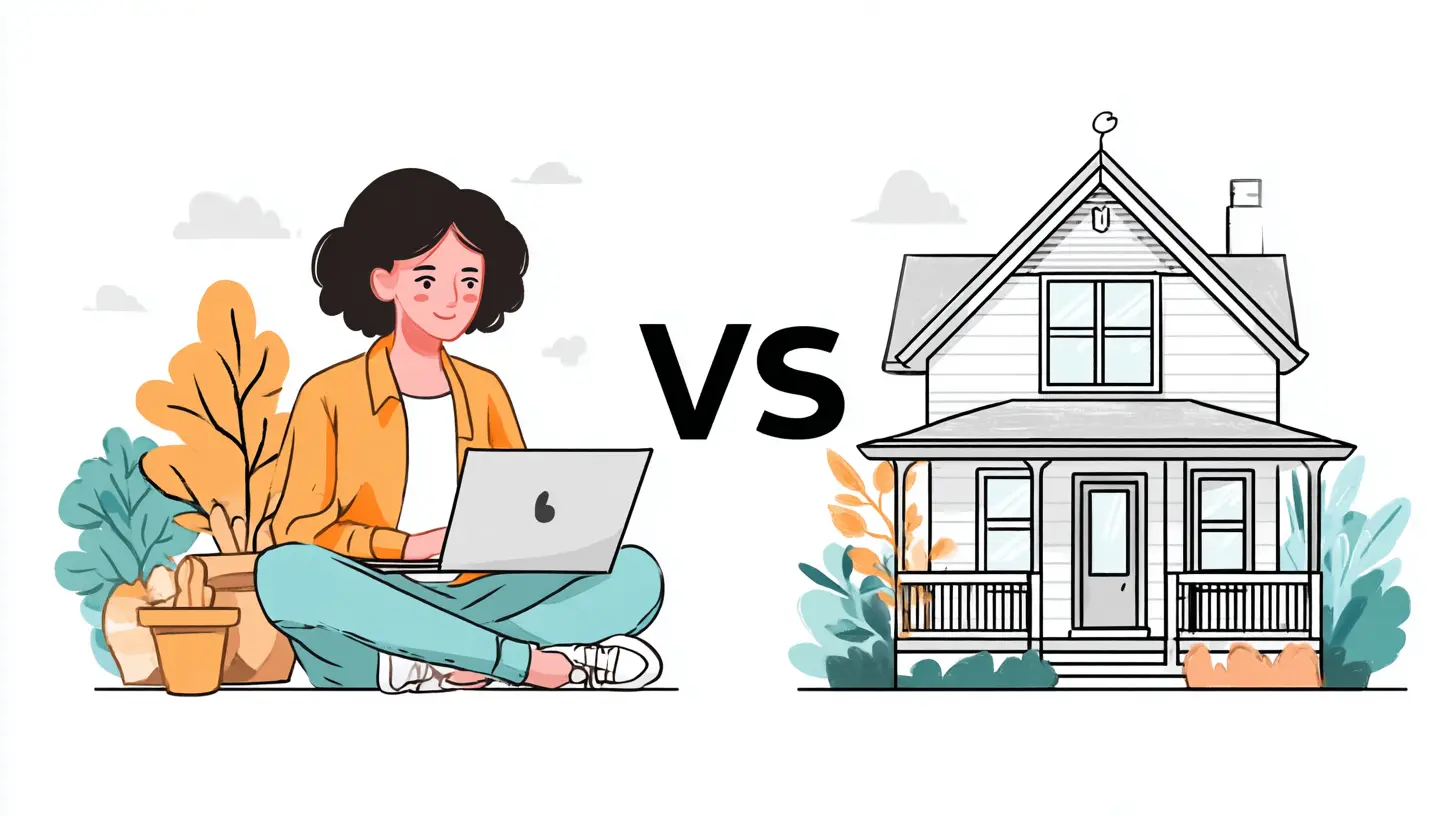
Most people compare the monthly mortgage payment to the monthly rent on a comparable property. That is a start, but it is dangerously incomplete. Homeownership comes with a suite of costs that renters never see.Property taxes can increase every year. Homeowners insurance is mandatory and has been rising in many areas due to climate-related risks. Maintenance is the big one that nobody budgets for correctly. A common rule of thumb is to set aside one to three percent of the home's value annually for upkeep. That means on a $400,000 home, you should expect to spend between $4,000 and $12,000 per year on repairs and replacements, even in good years. The roof will eventually need replacing. The water heater will die. The HVAC system will fail at the worst possible moment.
Then there are the costs of buying itself. Closing costs typically run two to five percent of the purchase price. If you put down 20 percent on a $400,000 home, that is $80,000 down plus another $8,000 to $20,000 in closing costs. That is a massive amount of capital tied up in an illiquid asset. If the market dips and you need to move in three years, you could easily sell for less than you owe after transaction costs.
The break-even point for buying versus renting is usually around five to seven years. If you sell before that, you will likely lose money compared to renting, even in a rising market. This is because the upfront costs and the interest-heavy early years of the mortgage mean your equity builds slowly at first. The longer you stay, the better the math works in your favor. But if you are not sure you will stay in the same city for at least five years, buying is often a financially losing bet.
The Hidden Flexibility Premium
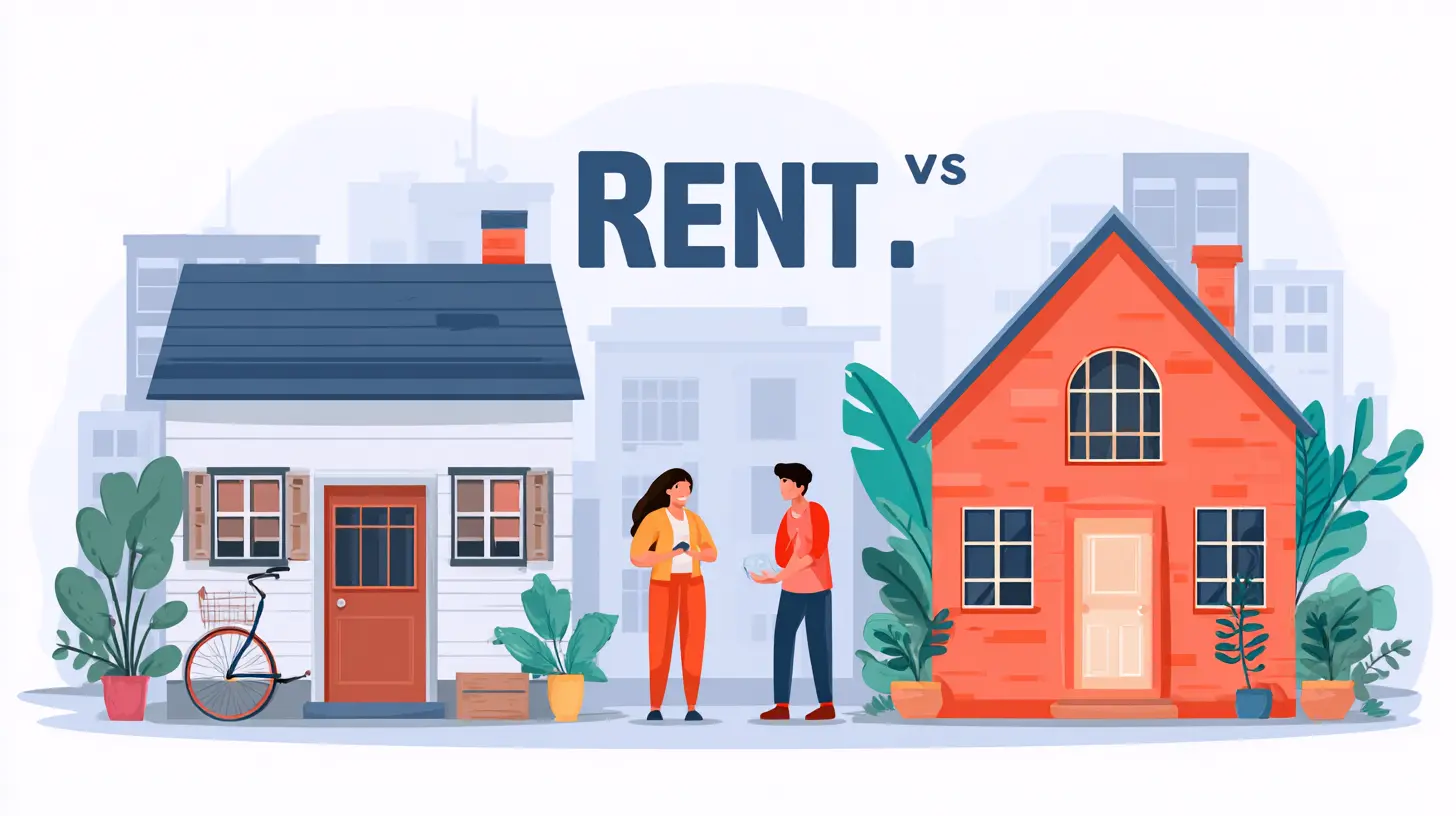
Millennials and Gen Z are the most geographically mobile generations in recent history, and not always by choice. The gig economy, remote work, and the rise of contract-based employment mean that job stability is not what it was for the Baby Boomers. A home is a ball and chain in that context.Renting gives you a flexibility premium. If you get a better job offer in another city, you can give 30 days notice and leave. If your industry crashes and you need to move to a cheaper area, you can do so without the stress of selling a property. If your relationship ends, you can downsize or relocate without a painful financial settlement over who keeps the house.
This flexibility has real monetary value. Studies and economic analyses have repeatedly shown that geographic mobility is correlated with higher lifetime earnings, especially for younger workers. The ability to move to where the jobs are, or to where the cost of living is lower while keeping a remote salary, is a significant financial advantage. Buying a home can close that door for years.
On the other hand, renting has its own hidden costs. Rent increases are not capped in most markets, and landlords can decide not to renew your lease. You can be forced to move even if you want to stay. The flexibility cuts both ways - it protects you, but it also means you have no control over your housing stability.

The Down Payment Problem and Opportunity Cost
The biggest barrier to homeownership for younger generations is the down payment. The median home price in many desirable metros is now well above $500,000. A 20 percent down payment on that is $100,000. For a household earning the median income, saving that amount takes years, especially while paying off student loans and dealing with rent that eats up thirty percent or more of take-home pay.Many people respond to this by using a lower down payment. FHA loans allow as little as 3.5 percent down. Conventional loans can go as low as 3 percent for first-time buyers. This lowers the barrier to entry, but it comes with costs. You will pay private mortgage insurance (PMI) until you reach 20 percent equity. That is an additional monthly cost that does nothing for you. You will also have a higher monthly payment because your loan is larger relative to the home's value.
The opportunity cost of the down payment is rarely discussed. That $100,000 could instead be invested in a diversified stock portfolio. Historically, the stock market has returned around seven to ten percent annually over the long term, before inflation. Real estate appreciates at a much slower rate, typically three to five percent annually, before costs. The difference matters enormously over a decade.
Consider this: if you put $100,000 into a low-cost index fund and add nothing else, at seven percent annual returns, you would have roughly $197,000 after ten years. If you instead put that $100,000 into a home that appreciates at four percent annually, you would have about $148,000 in home value growth, but you would also have paid tens of thousands in interest, taxes, insurance, and maintenance over that period. The stock investment is not necessarily better because you need a place to live, but it shows that the down payment is not a risk-free investment. It is a bet on real estate appreciation, and that bet has a real cost.
The Psychological Side of Owning
Money is not the only factor. Owning a home changes how you relate to your living space. For some people, that is deeply positive. You can paint the walls any color you want. You can knock down a wall or renovate a kitchen. You can plant a garden and know that you will be there to see it mature. There is a sense of stability and permanence that renting rarely provides.For others, homeownership is a source of constant anxiety. The furnace makes a strange noise and you immediately wonder what it will cost to fix. The roof starts leaking and you cannot just call the landlord. Every small issue is your problem, and the list of small issues never ends. Homeownership is not passive. It is an ongoing project that requires time, energy, and money.
This psychological difference is not trivial. If you are the type of person who finds satisfaction in maintaining and improving a property, owning can be deeply rewarding. If you would rather spend your weekends hiking, socializing, or working on your career, the constant demands of home maintenance can feel like a second job. Be honest with yourself about which type you are before you commit to a mortgage.
The Current Market Reality for Younger Buyers
The housing market in the mid-2020s is uniquely challenging for first-time buyers. Interest rates are significantly higher than they were a few years ago. A 3 percent mortgage is gone for most people, replaced by rates in the six to seven percent range. That changes the math dramatically.On a $400,000 home with a 20 percent down payment, a 3 percent interest rate gives you a monthly principal and interest payment of about $1,350. At 6.5 percent, that same loan costs about $2,020 per month. That is a difference of $670 per month, or over $8,000 per year. For many households, that is the difference between comfortably affording a home and being house-poor.
At the same time, home prices have not fallen to compensate for higher rates. Sellers who locked in low rates are reluctant to sell and give up those mortgages. This creates a supply shortage that keeps prices high. The result is that many younger buyers are priced out of the markets where they grew up or where the jobs are.
This does not mean buying is impossible. It means you may need to adjust your expectations. A smaller home, a less desirable neighborhood, or a city with a lower cost of living might make the math work. But it also means that renting is not a failure. In many cases, it is the rational response to a market that has not yet adjusted to the new interest rate environment.
Renting and Investing: The Alternative Strategy
There is a third path that is rarely discussed in mainstream financial advice: rent and invest the difference. This is not a compromise. For many people, it is the optimal strategy.The idea is simple. If renting costs you $2,000 per month and buying the equivalent property would cost you $3,000 per month including all expenses, you invest the $1,000 difference in a diversified portfolio. Over time, your portfolio grows, and you benefit from the liquidity and flexibility of not being tied to a property.
The math can work out remarkably well. Historically, the stock market has outperformed real estate appreciation in most long-term periods, especially after accounting for the costs of homeownership. The key is discipline. You have to actually invest the difference rather than spending it on lifestyle inflation. If you can do that, renting becomes not just acceptable but financially superior.
This strategy also avoids the concentration risk of homeownership. When you buy a home, a huge portion of your net worth is tied to a single asset in a single location. If the local economy declines, if a major employer leaves town, or if the neighborhood deteriorates, your largest investment suffers. A diversified portfolio spreads that risk across thousands of companies and markets.
The Case for Buying When You Are Ready
None of this is to say that buying is a bad idea. For many people, it is the right choice. The key is to buy when you are genuinely ready, not when social pressure or fear of missing out pushes you into it.You are probably ready to buy if you meet several conditions. You have a stable job that you expect to keep for at least a few years. You have a down payment saved without draining your emergency fund. You have a plan to stay in the same area for at least five to seven years. You have budgeted for the full cost of ownership, including maintenance and potential increases in taxes and insurance. And you are buying because you want the lifestyle that comes with owning, not just because you think it will make you rich.
Buying also makes more sense in certain markets. In areas where rents are high and home prices are relatively moderate, the monthly cost of owning can be close to or even lower than renting. In those cases, the equity-building aspect of a mortgage becomes more attractive. You should run the numbers for your specific city rather than relying on national averages.
Common Mistakes to Avoid
Several mistakes are common among first-time buyers in these generations. The first is buying too much house. Lenders will often approve you for a mortgage that is far larger than what you can comfortably afford. Just because a bank says you qualify for a $600,000 loan does not mean you should take it. A good rule of thumb is that your total housing costs should not exceed 28 to 30 percent of your gross income. Some financial advisors suggest being even more conservative in high-cost areas.The second mistake is ignoring the maintenance fund. New buyers often assume that because the home inspection passed, nothing will break. Within the first year, something will break. It always does. If you do not have a separate savings account for home repairs, you will end up putting unexpected expenses on a credit card and paying interest on them.
The third mistake is buying before you have dealt with other high-interest debt. If you have credit card debt at 20 percent interest or a car loan at 8 percent, paying that down should come before saving for a down payment. The interest on consumer debt is almost always higher than the return you will get from home equity.
The fourth mistake is treating your home as an investment that will fund your retirement. Your primary residence is a place to live first and an investment second. It does not generate income. It generates expenses. The equity you build is illiquid, meaning you cannot easily access it without selling or taking out a loan. Relying on home appreciation to fund your retirement is risky, especially if you plan to stay in the home for decades.
The Role of Timing
Timing the market is a fool's game, whether we are talking about stocks or real estate. Nobody can consistently predict when prices will rise or fall. What you can do is make a decision based on your personal circumstances and the current market conditions in your area.If interest rates are high, it may be wise to wait, save more for a down payment, and buy when rates are more favorable. If home prices in your area are inflated relative to local incomes, renting and investing might be the better play. If you find a property that you love and the numbers work for your budget, do not let the fear of a future crash stop you from buying a home you plan to live in for many years.
The worst decisions are usually made when people rush. Whether you buy because you are afraid rents will keep rising, or you rent because you are afraid home prices will crash, you are letting fear drive a major financial decision. Take your time. Run the numbers. Talk to a financial advisor who is not trying to sell you a mortgage.
A Framework for Your Decision
To simplify, here is a practical framework you can use when considering the decision.First, calculate the all-in monthly cost of owning the property you would want. This includes the mortgage payment, property taxes, insurance, PMI if applicable, and an estimate for maintenance. Compare that to the rent on a similar property.
Second, determine how long you plan to stay. If it is less than five years, renting is almost always the better financial choice. If it is more than seven years, buying becomes more attractive.
Third, check your savings. Do you have a down payment plus closing costs plus a separate emergency fund of at least three to six months of expenses? If not, you are not ready to buy, regardless of the market.
Fourth, assess your career and life stability. Are you likely to move for a job? Are you in a relationship that could lead to relocation? Are you planning to start a family and need more space in the next few years? If the answers are uncertain, renting gives you the flexibility to adapt.
Finally, look at the numbers for your specific market. In some cities, renting is dramatically cheaper than owning. In others, the gap is small. Use online calculators that account for all the costs, not just the monthly payment.
The Bottom Line
There is no universal answer to the rent versus buy question. The right choice depends on your financial situation, your career, your personality, and your goals. What is true for everyone is that this decision should not be made based on emotion, social pressure, or a one-size-fits-all rule you heard from someone who bought a home in a different era.Renting is not a waste of money. It is a purchase of flexibility and freedom. Buying is not a guaranteed path to wealth. It is a commitment to a particular place and a particular lifestyle. Both options can be financially sound. Both options can be financial disasters if you approach them without a clear understanding of the costs.
The most important thing you can do is take ownership of your financial education. Understand your cash flow. Know what you can truly afford. Be honest about your plans for the next decade. And do not let anyone make you feel like a failure because you choose to rent while you are building your career and your savings. The best financial decision is the one that supports the life you actually want to live, not the life that looks good on Instagram.
all images in this post were generated using AI tools
Category:
Renting Vs BuyingAuthor:

Julia Phillips
Discussion
rate this article
2 comments
Catherine McMurtry
Understanding the long-term costs and benefits of renting versus buying can help Millennials and Gen Z make informed decisions.
September 25, 2026 at 4:26 AM
Pia Wade
In the dance of choice, renting breathes freedom, yet buying holds roots. Millennials and Gen Z, weigh dreams against reality. Each path has its song, a balance of heart and wallet. Choose wisely, for the home we nurture shapes the life we lead...
September 6, 2026 at 12:41 PM
Julia Phillips
You make a great point about the balance between freedom and stability. It's essential for young people to consider what each option truly offers. Choices today can shape their future in meaningful ways.