What Open Banking Means for Your Financial Privacy
21 August 2026
Open banking is one of those terms that gets thrown around in financial circles with a mix of excitement and dread. For some, it promises a new era of personalized services and seamless money management. For others, it sounds like a backdoor into their most sensitive financial data. The truth sits somewhere in between, and understanding that middle ground is essential if you want to make informed decisions about your money.
At its core, open banking is about data sharing. It allows third-party financial service providers to access your banking information, but only with your explicit consent. This is not a free-for-all where anyone can peek into your account. It is a regulated framework, often mandated by government policy, that forces traditional banks to open up their application programming interfaces, or APIs, to authorized outsiders. These APIs are the digital pipes that let different software systems talk to each other. When you connect a budgeting app to your checking account, that connection usually happens through an API.
The promise is simple: better products, lower costs, and more control. The risk is also simple: more parties handling your data means more potential points of failure. But the reality is far more nuanced than either the utopian or dystopian version. Let's break down what open banking actually changes for your privacy, what it does not change, and how you can protect yourself without giving up the benefits.
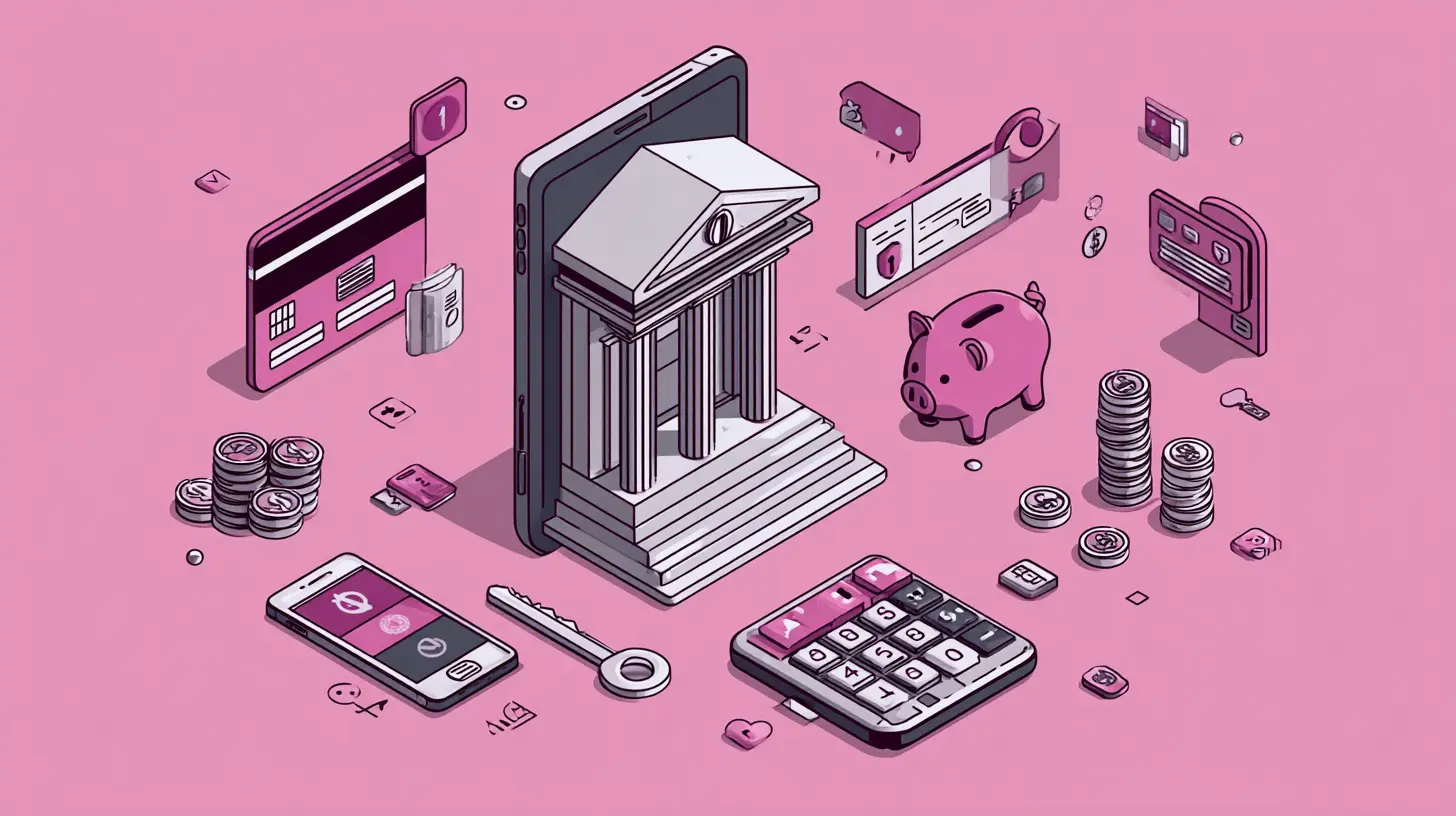
The Consent Model: Who Really Controls Your Data?
Before open banking, your financial data was largely siloed inside your bank. If you wanted to use a third-party service to analyze your spending, you often had to hand over your online banking credentials, username and password, to that service. This was a nightmare for security. The third party could see everything, and you had no way to limit what they accessed. It was like giving a valet the keys to your house instead of just the keys to your car.Open banking replaces that model with a token-based consent system. When you authorize a third-party app to access your account, the bank issues a unique token. This token grants the app access only to the specific data you approved, for a specific period, and for a specific purpose. You can revoke it at any time. The app never sees your password. The bank does not share your entire transaction history unless you say so.
This is a genuine improvement. It moves from an all-or-nothing approach to a granular one. But here is the catch: consent is only as good as your understanding of what you are consenting to. Many people click through permission screens without reading them. They see a button that says "Allow" and they hit it because they want the service to work. The privacy risk in open banking is not usually the technology. It is the human tendency to ignore the fine print.
You need to treat every consent screen like a contract. Ask yourself what data the app is requesting, why it needs it, and how long it will keep it. If an app asks for access to your transaction history but only needs your account balance to function, that is a red flag. Legitimate services will ask for the minimum necessary. Anything more should make you pause.
What Data Is Actually Shared?
Open banking does not mean your bank broadcasts your financial life to the world. The data sharing is specific and structured. Typically, the shared data falls into three categories.First is account information. This includes your account balance, transaction history, and sometimes details about your recurring payments. This is the most common type of data shared with budgeting apps, financial planning tools, and credit scoring services.
Second is payment initiation. This allows a third party to initiate a payment from your account on your behalf, without you having to log into your bank separately. Think of paying for an online purchase directly from your bank account through a merchant's website. The third party sends a payment instruction to your bank, and the bank executes it. This is convenient, but it also means you are trusting that third party to handle your money correctly.
Third is account aggregation. This is when a service pulls data from multiple accounts across different banks into one dashboard. It gives you a holistic view of your finances. The service sees everything, but it is supposed to use that data only to provide you with the consolidated view.
What is not shared is your personal identification information, like your social security number or your full date of birth, unless absolutely necessary. The system is designed to minimize the exposure of sensitive identifiers. However, the line between financial data and personal data can blur. Your transaction history reveals a lot about you: where you shop, what you eat, who you pay, and when you are active. That data is valuable, not just to you but to marketers, lenders, and data brokers.

The Trade-Off Between Convenience and Exposure
There is no free lunch. Open banking offers real convenience, but it also creates a larger attack surface. Every third-party app you connect to is another entity that holds a piece of your financial puzzle. If that entity has weak security, your data could be exposed in a breach. You are not just trusting your bank anymore. You are trusting every app you connect to your bank.This is a trade-off you need to consciously accept. The convenience of having all your accounts in one app, or the ability to get instant loan pre-approval based on real-time data, comes at the cost of spreading your data across more systems. The key is to minimize the number of parties you trust. Do not connect every app you come across. Be selective. Each connection should earn your trust through a clear privacy policy, a solid reputation, and a demonstrated commitment to security.
A common mistake is assuming that because an app is popular, it is safe. Popularity does not equal security. Some of the largest data breaches in history happened at well-known companies. You should check if the app is regulated by a financial authority in your country. In the European Union, open banking providers must be authorized under the Revised Payment Services Directive, or PSD2. In the United Kingdom, the Financial Conduct Authority oversees them. In the United States, the landscape is more fragmented, but the Consumer Financial Protection Bureau has been moving toward a rule that would standardize data sharing.
How Banks Handle Your Data Differently
Traditional banks have a long history of handling sensitive data, but they are not infallible. They have had breaches, and they have also been criticized for selling customer data to third parties for marketing purposes. Open banking does not change that. Your bank can still use your data for its own purposes, as outlined in its privacy policy. What open banking does is force banks to share that data with competitors and third parties, which they previously resisted.Banks are now in a strange position. They have to build APIs that allow outsiders in, but they also have to protect their customers. This has led to a lot of friction. Some banks have been slow to implement open banking standards, while others have embraced them as a way to offer new services. From a privacy perspective, you should know that your bank's incentives are not always aligned with yours. A bank might share your data with a partner that pays it a fee. That is legal, but it is not necessarily in your best interest.
You should read your bank's privacy policy, not just the summary. Look for sections on data sharing with third parties. See if you can opt out of certain types of sharing. In many jurisdictions, you have the right to restrict how your data is used for marketing purposes. Exercise that right. It is one of the few ways you can push back against the data economy.
The Role of Screen Scraping and Why It Still Exists
Open banking was supposed to eliminate screen scraping, the practice where a third party logs into your account using your credentials and copies the data from the web page. But screen scraping still exists, especially in markets where open banking APIs are not fully implemented or where third parties prefer the simplicity of scraping.Screen scraping is dangerous. It means the third party has your actual username and password. If that third party is compromised, your credentials are in the hands of criminals. You also have no control over what data is collected. The scraper sees everything on the page. This is the opposite of the token-based consent model.
You should avoid any service that asks for your online banking credentials directly. There is no legitimate reason for a reputable service to do this in a market with open banking standards. If you are in a region where open banking is not available, you have to weigh the risk. Sometimes screen scraping is the only way to get a service you need. But you should understand that you are taking on significant risk. Change your password regularly, monitor your account for unauthorized activity, and be ready to revoke access at any time.
Misconceptions About Data Anonymization
One of the biggest misconceptions is that your data is anonymized before it is shared or sold. Anonymization sounds great. It suggests that your personal details are stripped away, leaving only a meaningless set of numbers. But true anonymization is incredibly difficult to achieve. Researchers have repeatedly shown that supposedly anonymized datasets can be re-identified by cross-referencing with other public data.In the context of open banking, your transaction data is rarely fully anonymized. Even if your name is removed, the patterns in your spending are unique to you. A determined analyst could match those patterns to other data sources and figure out who you are. This is not science fiction. It is a real concern that privacy advocates have raised for years.
You should assume that any data you share can be linked back to you, even if the service promises otherwise. Do not share data that you are not comfortable being associated with your identity. This is a conservative approach, but it is the only safe one.
Practical Steps to Protect Your Privacy
So what should you actually do? Start by taking inventory of every financial app you currently use. Make a list of all the connections between your bank accounts and third-party services. For each one, ask yourself if you still need it. If not, revoke access. Most banks have a dashboard where you can see and manage third-party access. Use it.When you consider a new app, do a quick background check. Look for the company's privacy policy and read it. See if they have had any data breaches in the past. Search for news about them. Check if they are regulated by a financial authority. If they are not, that is a warning sign.
Set up alerts on your bank accounts for any transaction over a certain amount. This way, if a third party makes an unauthorized payment, you will know quickly. Also, use strong, unique passwords for your banking and email accounts. Your email is often the key to resetting passwords, so protect it like the crown jewels.
Consider using a separate bank account for open banking connections. If you want to use budgeting apps or payment initiation services, link them to an account that only holds a limited amount of money. This limits your exposure. If something goes wrong, the damage is contained.
The Future of Open Banking and Privacy
Open banking is not static. It is evolving toward open finance, which would expand data sharing beyond bank accounts to include investments, pensions, insurance, and mortgages. This could be incredibly useful, but it also multiplies the privacy implications. The more data that is shared, the more you need to be vigilant.There is also the rise of data aggregation and artificial intelligence. Services will increasingly use your financial data to make predictions about your behavior, offer personalized products, and even adjust pricing. This can be beneficial, but it can also lead to discrimination. If an AI model decides that your spending patterns indicate risk, you might be denied a loan or offered worse terms. You have little recourse because the model is opaque.
Regulation is trying to keep up, but it is always behind the technology. The best defense is your own awareness. Understand what you are sharing, with whom, and for what purpose. Do not rely on companies to protect you. They are in the business of using data, not protecting it.
Open banking is not inherently good or bad for your privacy. It is a tool. How it affects you depends on how you use it. If you are careless, it can expose you to risk. If you are thoughtful, it can give you more control over your financial life than you ever had before. The power is in your hands, but only if you choose to exercise it.
all images in this post were generated using AI tools
Category:
Banking SecurityAuthor:

Julia Phillips
Discussion
rate this article
2 comments
Wade Black
Open banking promises convenience, but it also opens the door to potential privacy risks. Are we trading security for seamless transactions? Only time will tell...
September 2, 2026 at 3:35 AM
Kiera McCune
Open banking offers convenience but raises crucial concerns about financial privacy. As consumers share data for better services, we must question who controls this information and how it's used. Balancing innovation with security is essential to ensure that our financial lives remain protected and respected.
August 23, 2026 at 12:20 PM
Julia Phillips
You make a great point. While open banking can enhance services, it does raise valid concerns about privacy and data control. It's vital we prioritize security as we embrace this innovation.