From Spreadsheets to Smart Apps: The Evolution of Money Management
23 September 2026
Money management has always been about the same core questions: Where did my money go? Do I have enough for what comes next? Am I building toward something or just treading water? What has changed, dramatically, is the toolkit we use to answer those questions.
For decades, the spreadsheet was the undisputed workhorse of personal and small business finance. Then dedicated software arrived. Then the cloud. Then mobile apps, open banking, and now automated intelligence layered on top of transaction data. Each shift changed not just convenience but behavior. When tracking becomes effortless, people track more. When categorization becomes automatic, budgets get reviewed instead of abandoned. When forecasting becomes visual, long-term planning stops feeling abstract.
This article traces that evolution, but the goal is not nostalgia. It is to help you decide which tools actually fit your financial life, where each approach shines, where it fails, and what trade-offs you accept when you adopt one over another.
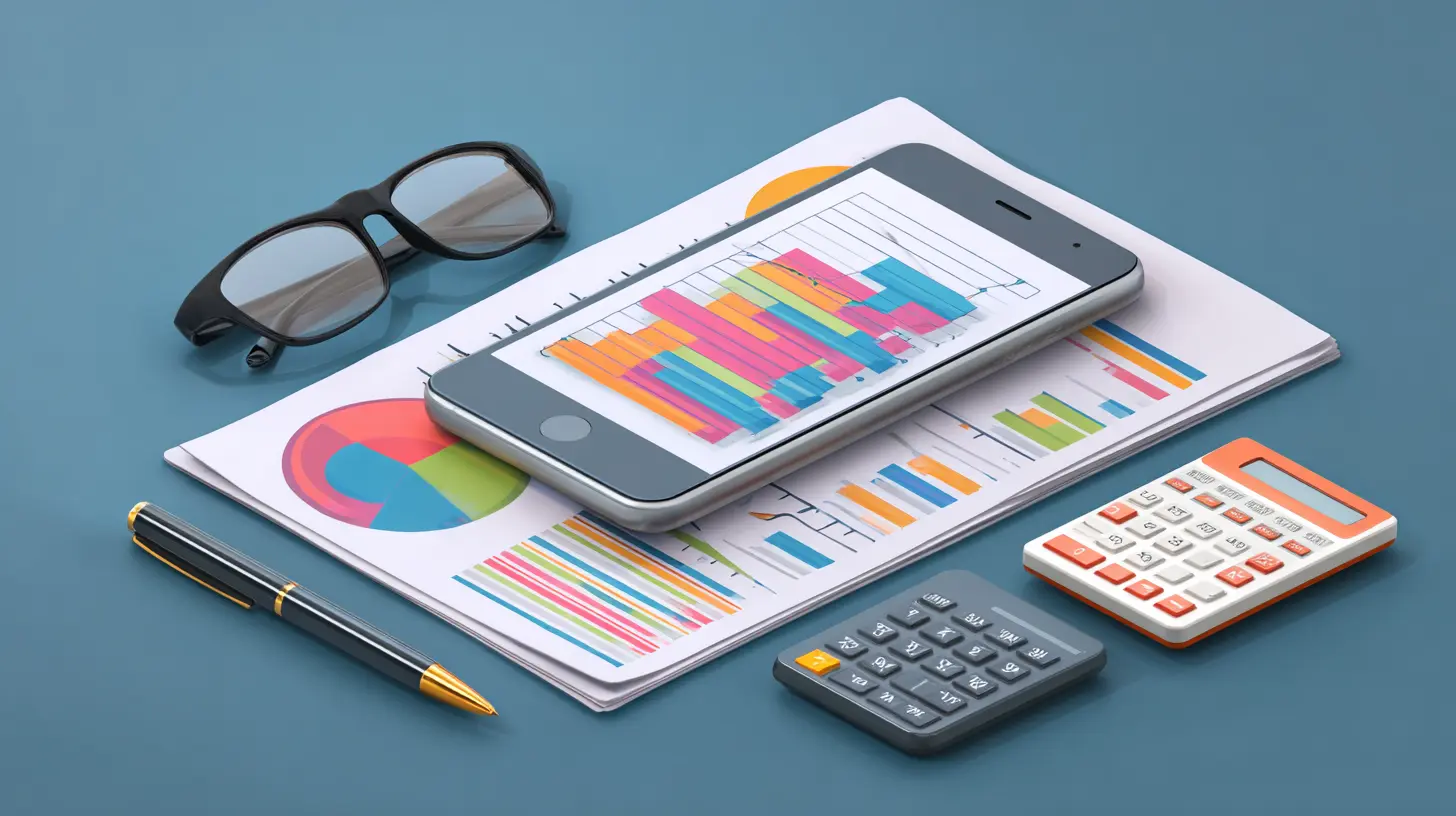
Why the Spreadsheet Era Lasted So Long
The spreadsheet's dominance was not an accident. It survived because it offered something no early finance app could match: total control.A spreadsheet does not care what category you use. It does not force a bank connection. It does not charge a subscription. It does not sell your data or change its interface every six months. You define the columns, the formulas, the structure. For people who think in numbers, that flexibility is not a minor feature. It is the entire point.
Consider a freelancer tracking irregular income. A spreadsheet can model a rolling three-month average, apply a tax reserve percentage, and project cash flow under three different client scenarios, all in one file. Most consumer budgeting apps cannot do that without workarounds.
The trade-offs, however, are real and they compound over time:
- Manual entry is a tax on consistency. Every transaction must be typed or imported. Miss a week and the data becomes unreliable.
- Formulas break silently. A shifted row or a deleted cell can produce wrong totals that look plausible. This is one of the most common and dangerous spreadsheet errors.
- Collaboration is clumsy. Sharing a budget with a partner often means emailing files, which quickly creates version conflicts.
- No live connection to accounts. The spreadsheet reflects what you remembered to enter, not what actually happened.
The deeper issue is behavioral. A spreadsheet has no feedback loop. It will not nudge you, warn you, or summarize anything unless you build that yourself. For disciplined users, that is fine. For everyone else, the spreadsheet becomes a graveyard of good intentions, updated enthusiastically in January and ignored by March.
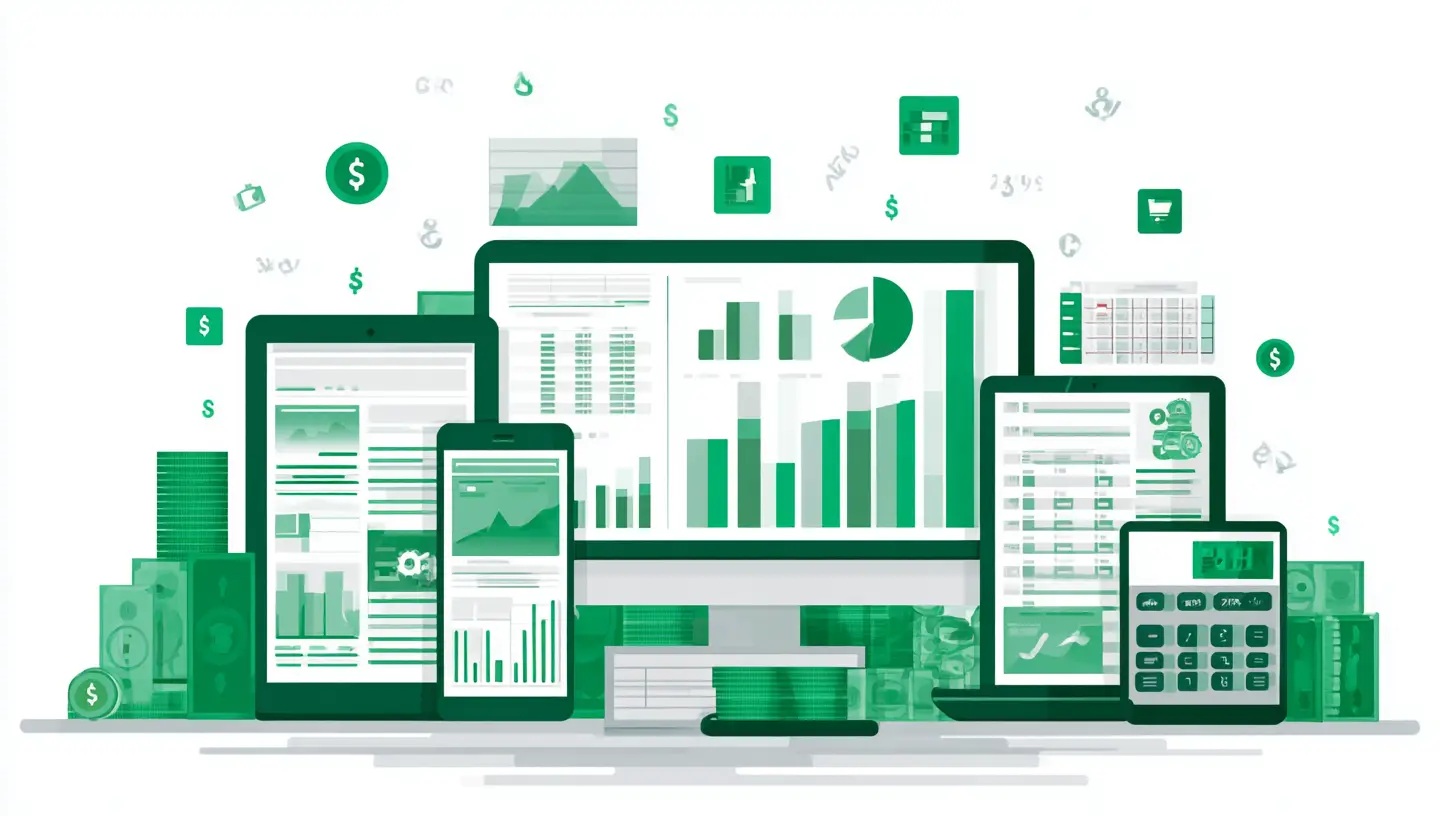
The First Wave of Dedicated Software
Desktop programs like Quicken and Microsoft Money (the latter discontinued years ago) changed the model. Instead of building your own structure, you got a predefined one: accounts, categories, registers, reports. The software handled the math.This mattered because it separated two jobs that spreadsheets conflate: recording transactions and analyzing them. Once the recording was standardized, reports became reliable. You could see spending by category without writing a single formula.
The limitations were also structural:
- The data lived on one computer. If that machine failed and you had no backup, years of history could vanish.
- Bank connections were limited and fragile. Early downloads often required manual file imports.
- The category system was rigid. Custom needs, like splitting a single purchase across business and personal use, required awkward workarounds.
Still, this era established an important principle that persists today: the value of a finance tool comes less from its features and more from how consistently it captures accurate data with minimal friction.

Cloud and Mobile: The Behavior Shift
When finance tools moved to the cloud and then to phones, the change was not just technical. It was psychological.Checking a balance moved from a monthly ritual to a daily habit. Categorizing a purchase moved from a weekend chore to a five-second action at the checkout counter. Budgets became living documents rather than archived artifacts.
This shift produced measurable behavioral benefits, though the magnitude depends heavily on the individual. The general pattern is well understood in behavioral finance: feedback that is immediate and specific tends to influence behavior more than feedback that is delayed and abstract. A notification that says you have spent 80 percent of your dining budget with ten days left in the month lands differently than a spreadsheet cell that quietly turns red.
But mobile-first design introduced new trade-offs:
- Simplicity can hide important detail. A clean dashboard may obscure fees, interest calculations, or the difference between pending and posted transactions.
- Automatic categorization is imperfect. Merchants with vague names, split transactions, and cash purchases routinely get miscategorized. If you never review, your reports drift from reality.
- Subscription fatigue is real. Many users end up paying for two or three overlapping apps, which defeats the purpose.
- Data privacy becomes a live concern. Aggregators connect to your accounts. Understanding who holds your credentials and how they are protected is not optional.
A practical rule: automation should reduce effort, not reduce awareness. If you cannot explain where a number on your dashboard came from, the tool is doing you a disservice.

How Modern Money Apps Actually Work
Under the hood, most modern finance apps follow a similar pipeline:1. Connection. The app links to your bank or card through an aggregator or, increasingly, through regulated open banking interfaces.
2. Ingestion. Transaction data flows in, often with a delay of a day or more depending on the institution.
3. Enrichment. Merchant names are cleaned up, categories are assigned, and duplicates are merged.
4. Presentation. Dashboards, budgets, and forecasts are generated from the enriched data.
5. Automation. Rules, alerts, and transfers trigger based on thresholds or patterns.
Understanding this pipeline explains most user frustrations. Delayed postings are not app bugs; they reflect how banks batch transactions. Miscategorized entries usually stem from enrichment rules, not from your input. And synchronization failures often trace back to the bank's authentication requirements, not the app itself.
Open Banking and What It Changed
Open banking frameworks, which require banks to provide standardized access to customer data with consent, changed the economics of finance apps. Before, aggregators often relied on screen scraping, which was brittle and sometimes violated bank terms. With regulated interfaces, connections became more stable and more secure in principle.The practical benefits for users include:
- More reliable syncing
- Clearer consent controls, including the ability to revoke access
- Better dispute resolution when something goes wrong
The caveats matter too. Open banking is not uniformly implemented across countries. Some institutions still lag. And consent, while powerful, is only as good as your diligence in reviewing which apps have access and removing the ones you no longer use.
Spreadsheets vs. Apps: An Honest Comparison
The right answer depends on your situation, not on which tool is newer. Here is a framework that holds up in practice.Choose a spreadsheet when:
- Your finances are complex or unusual, such as multiple currencies, partnerships, or custom tax treatment
- You value privacy and prefer not to link accounts
- You enjoy building and maintaining your own system
- You need full auditability and want to trace every number to its source
Choose a dedicated app when:
- You want daily or weekly visibility without manual entry
- You need automatic categorization and alerts
- You share finances with a partner and need a single source of truth
- You want forecasting and goal tracking without building models
Consider a hybrid when:
- You want automated tracking for day-to-day spending but custom modeling for taxes, investments, or business planning
- You are transitioning from one approach to the other and want to run both in parallel for a few months
The hybrid approach is underrated. Many experienced users keep a spreadsheet for annual planning and a app for daily tracking. The spreadsheet handles scenarios; the app handles reality. The friction is low if you reconcile monthly.
Common Mistakes and Misconceptions
A few patterns show up again and again, and avoiding them saves both money and frustration.Mistake 1: Trusting automation blindly. Automatic categories are a starting point, not a verdict. Review them monthly, especially for large or recurring transactions.
Mistake 2: Connecting every account on day one. Start with one or two accounts. Add more once you understand how the app handles sync delays, pending transactions, and transfers.
Mistake 3: Confusing net worth with liquidity. A dashboard showing a healthy net worth can mask a cash flow problem. Always check available cash separately, particularly before large purchases.
Mistake 4: Assuming a budget is the goal. A budget is a plan, not an outcome. The value comes from comparing plan to actual and adjusting. A budget you never review is decoration.
Misconception: Apps are inherently more accurate than spreadsheets. Accuracy depends on data quality. A well-maintained spreadsheet beats a poorly configured app every time.
Misconception: More features mean better outcomes. Feature bloat often reduces usage. The best tool is the one you will actually open.
Best Practices That Apply to Any Tool
Regardless of whether you use a spreadsheet, an app, or both, a few principles consistently improve results.Separate tracking from planning. Tracking is backward-looking; planning is forward-looking. Use different views or even different tools for each.
Reconcile monthly. Compare your records against bank statements at least once a month. This catches errors, fraud, and forgotten subscriptions.
Categorize for decisions, not for tidiness. If a category never influences a decision, simplify it. Twenty categories you never review are worse than five you act on.
Automate transfers, not judgments. Automating savings contributions works well. Automating spending decisions rarely does.
Review subscriptions quarterly. Recurring charges are the most common source of unnoticed leakage. A quarterly audit typically pays for itself.
Keep a manual override. Whatever tool you use, maintain a simple way to record cash transactions and corrections. Cash still exists, and so do mistakes.
What Comes Next
The direction of travel is clear: more automation, more integration, and more intelligence layered on top of transaction data. Expect to see forecasting that adapts to your actual patterns, alerts that distinguish between anomalies and normal variation, and planning tools that connect short-term cash flow to long-term goals.The risks are equally clear. Automation can create complacency. Integration can concentrate sensitive data in fewer places. Intelligence can be opaque, making it hard to know why a recommendation was made.
The sensible posture is neither enthusiasm nor suspicion, but engagement. Use automation to remove friction, but keep enough visibility to understand your own numbers. The tools will keep changing. The underlying skill, knowing where your money goes and why, remains yours to build.
all images in this post were generated using AI tools
Category:
Financial AppsAuthor:

Julia Phillips