Invest Smarter with These Innovative Financial Apps
18 August 2026
The financial technology landscape has shifted dramatically over the past decade. What once required a broker, a banker, and a pile of paperwork now fits in your pocket. But here is the uncomfortable truth: most people use financial apps the way they use a calculator for addition. They tap, they see a number, and they move on. That is not investing smarter. That is just digitizing old habits.
The real opportunity lies in understanding what these tools actually do, where they fail, and how to combine them into a system that works for your specific financial situation. This article is not a list of shiny features. It is a practical examination of how to use innovative financial apps to make better decisions, avoid costly mistakes, and build wealth with intention.
The Shift from Tracking to Decision Support
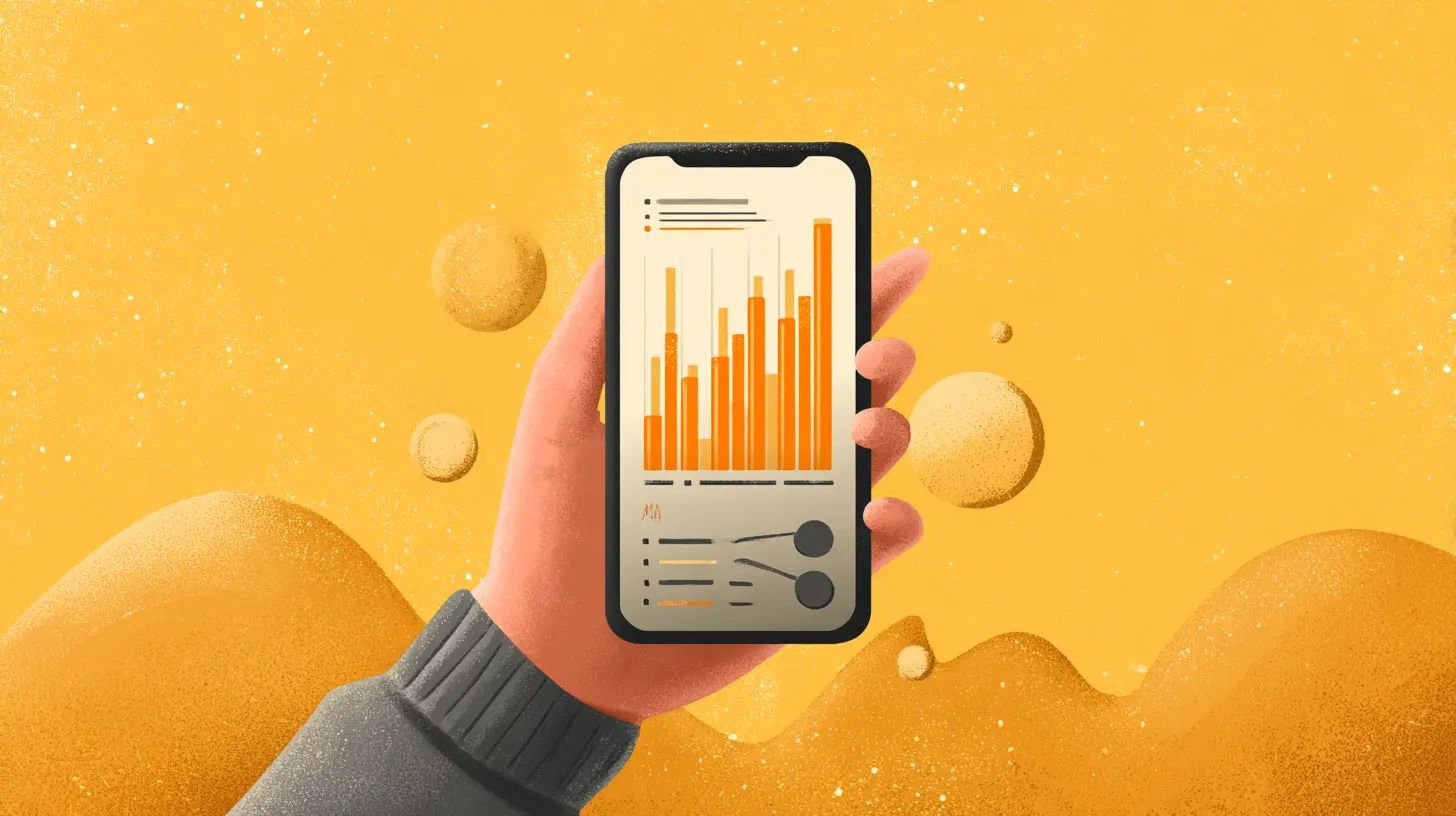
Early fintech apps were essentially digital ledgers. They showed you where your money went after you spent it. That is useful, but it is reactive. The new generation of apps aims to be proactive. They analyze cash flow, project future balances, suggest portfolio adjustments, and even automate tax-loss harvesting.The key difference is that these apps are not just telling you what happened. They are trying to tell you what to do next. That is a significant leap, and it comes with both promise and peril.
The promise is obvious. If an app can flag that your spending on dining out has crept up 40 percent over three months, you can correct course before it becomes a crisis. If it can simulate a market downturn and show you how your portfolio would react, you can adjust your risk tolerance before the panic hits.
The peril is less obvious but more dangerous. Apps that give recommendations can create a false sense of certainty. They use historical data and algorithms, but they cannot predict the future. They also do not know your full context. An app might suggest increasing your emergency fund to six months of expenses, but if you have a stable government job and a working spouse, three months might be perfectly adequate. The app does not know that.
So the first rule of using financial apps intelligently is this: treat them as advisors, not authorities. They provide data and models. You provide judgment.

Automating the Boring Stuff: Why It Works
One of the most underrated innovations in personal finance is automation. Not the automation of bill payments, which has existed for decades, but the automation of investment decisions.Apps that allow you to set recurring transfers into index funds, rebalance automatically, and reinvest dividends remove the emotional component from investing. This is not a small thing. Behavioral finance research consistently shows that individual investors underperform the market because they buy high and sell low. They chase performance. They panic in downturns. They tinker.
Automation breaks that cycle. When your investment app automatically deducts a set amount from your checking account on the first of every month and buys a diversified fund, you never have to make a decision. You never have to look at the market and wonder if today is a good day to buy. You just accumulate.
But automation has a dark side. It can lull you into complacency. If you set up automatic contributions and never review them, you might be saving too little for your goals or too much for your current needs. You might be overexposed to one sector because that fund performed well five years ago and you never revisited it.
The best practice is to automate the mechanics but schedule a manual review. Quarterly is a good cadence. Look at your contributions, your asset allocation, and your goals. Adjust if necessary. The automation handles the day-to-day discipline. The review handles the strategic direction.
Robo-Advisors: The Good, the Bad, and the Misunderstood
Robo-advisors were supposed to democratize wealth management. They did, to a degree. For a fraction of the cost of a human advisor, you get portfolio construction, rebalancing, and tax-loss harvesting. For many people, that is a massive improvement over doing nothing or making random stock picks.However, the term "robo-advisor" is misleading. These platforms are not robots that think. They are rule-based systems that follow a set of algorithms. They ask you a few questions about risk tolerance and time horizon, then plug you into a model portfolio. That model portfolio is often just a mix of low-cost index funds.
The innovation here is not the intelligence. It is the discipline. The app enforces a consistent investment strategy without letting your emotions interfere. That is genuinely valuable.
But there are trade-offs. Most robo-advisors do not handle complex situations well. If you have a large inheritance coming, a business you plan to sell, or a complicated tax situation, a robo-advisor will not give you the nuance you need. It will treat your money as a simple allocation problem, which it is not.
Another common misconception is that robo-advisors are always cheaper than human advisors. The fees are lower, yes, but they are not zero. And if the app does not offer tax-loss harvesting, you might be leaving money on the table in a taxable account. Compare the fee structure carefully. Sometimes a low-cost human advisor who charges a flat fee is actually more economical for a complex portfolio.
Also, consider the behavioral component. A human advisor can talk you off a ledge during a market crash. A robo-advisor cannot. If you are the type of person who gets anxious when your portfolio drops 20 percent, you might need a human just for the hand-holding. That is not weakness. It is self-awareness.
Micro-Investing Apps: Rounding Up Is Not a Strategy
Micro-investing apps that round up your purchases to the nearest dollar and invest the change are clever marketing. They make investing feel effortless and accessible. For someone who has never invested before, they can be a gateway habit. That is a legitimate benefit.But let us be clear: rounding up spare change is not a wealth-building strategy. If you spend two thousand dollars a month, rounding up might generate twenty dollars in investments. Over a year, that is two hundred and forty dollars. It is better than nothing, but it is not going to move the needle on your retirement.
The real problem with micro-investing apps is that they can create a false sense of progress. You feel like you are investing, so you do not push yourself to save more. You see the small balance growing and you feel good, but you are not addressing the fundamental question: are you saving enough of your income?
A better approach is to use micro-investing as a habit builder, not a primary strategy. Set up the round-ups if they motivate you, but also set up a real contribution that is a meaningful percentage of your income. Think of the round-ups as training wheels. Use them until you are comfortable, then take them off and ride properly.
Fractional Shares: Lowering the Barrier, Not the Risk
Fractional shares allow you to buy a piece of a stock or ETF rather than a whole share. This is a genuine innovation because it lets you diversify with small amounts of money. Instead of needing three hundred dollars to buy one share of a popular tech company, you can buy ten dollars worth.This is particularly useful for dollar-cost averaging into expensive stocks. You can invest a fixed amount every week without worrying about share prices. It also allows for more precise portfolio construction. You can allocate exactly five percent of your portfolio to a specific asset, even if that asset trades at a high price per share.
But here is the trap: fractional shares make expensive stocks feel affordable, which can encourage overconcentration. If you can buy ten dollars of a hot stock, you might be tempted to load up on it. That is the same mistake people made with whole shares, just in smaller increments. The risk is not the share price. It is the lack of diversification.
Use fractional shares to build a diversified portfolio, not to chase individual stocks. If you want to own a broad market index fund, fractional shares are excellent. If you want to own a single company because you think it will double, you are speculating, and the app is not going to save you from that.
Cash Management Features: The New Checking Account
Many investment apps now offer cash management accounts. These are not just places to park money before you invest. They function like checking accounts, with debit cards, bill pay, and direct deposit. The interest rates are often higher than traditional banks, and there are no monthly fees.This is a significant shift. It means you can keep your emergency fund, your spending money, and your investment portfolio in one ecosystem. That convenience can be powerful. You see your whole financial picture in one place, which makes it easier to make informed decisions.
But there are downsides. These accounts are often not covered by the same protections as traditional bank accounts. They are usually held at partner banks, and the FDIC insurance applies, but the app itself is not a bank. If the app company goes bankrupt, your funds might be tied up in legal proceedings, even if they are ultimately safe.
Also, having everything in one app can create a behavioral problem. When your emergency fund is right next to your investment account, the temptation to dip into savings for a "small" transfer is higher. That separation, which traditional banks provide by accident, is actually a useful psychological barrier.
My advice is to use a cash management feature for your operating cash, but keep your true emergency fund in a separate account at a different institution. The friction of moving money between them gives you a moment to pause and reconsider.
Tax-Loss Harvesting: The Hidden Gem
Tax-loss harvesting is one of the most valuable features offered by newer investment apps, and it is also the most misunderstood. The concept is simple: when an investment loses value, you sell it to realize the loss, then buy a similar but not identical investment to maintain your position. The loss can offset capital gains, reducing your tax bill.Automated tax-loss harvesting takes this process and runs it continuously. The app scans your portfolio, finds losses, and executes the trades without any action from you. Over a year, this can add a meaningful amount to your after-tax returns, especially in volatile markets.
But it is not magic. The savings depend on your tax bracket, the size of your portfolio, and the market conditions. In a bull market with few losses, there is not much to harvest. In a volatile market, the benefits are larger.
There is also a risk of over-optimization. Some apps harvest losses so aggressively that they trigger wash sale rules, which disallow the loss if you buy a substantially identical security within thirty days. The apps are designed to avoid this, but it is worth understanding the rules yourself.
More importantly, tax-loss harvesting should not drive your investment decisions. If you are in a low tax bracket, the benefit is minimal. If you are in a high bracket with a large taxable portfolio, it is worth paying attention to. But do not let an app's tax-loss harvesting feature convince you to hold a position you would otherwise sell. The tax tail should not wag the investment dog.
The Danger of Over-Appification
There is a real risk that comes with having too many financial apps. You might have one for budgeting, one for investing, one for retirement, one for credit monitoring, and one for crypto. Each app gives you a piece of the picture, but none gives you the whole.This fragmentation leads to a common mistake: making decisions based on incomplete information. You might see that your investment app shows a healthy balance and feel good, while ignoring that your credit card debt is growing in another app. Or you might rebalance your portfolio in one app without realizing that your 401(k) at work has a completely different allocation.
The solution is not to use fewer apps. The solution is to have a system. Use one app as your primary dashboard, the place where you see everything aggregated. Many apps now offer account aggregation, pulling data from other institutions into one view. Use that feature.
Also, resist the urge to chase new apps. Every new fintech product promises to be the one that finally gets your finances in order. They are not. The best app is the one you actually use consistently, not the one with the most features. Pick a small set of tools and master them.
Security and Privacy: The Non-Negotiable
Financial apps handle sensitive data. They know your income, your spending habits, your investment balances, and your social security number. That makes them a target for hackers. It also makes them a target for data brokers who want to sell your information.Before you link a bank account or investment account to any app, ask three questions. First, does the app use two-factor authentication? If not, do not use it. Second, does the app sell your data to third parties? Read the privacy policy carefully. Many free apps make money by selling aggregated data. That might be acceptable to you, but you should know about it. Third, what happens if the app goes out of business? Your money should be held at a regulated institution, not in the app's own accounts.
A practical rule is to use a separate email address for your financial apps. That way, if one of them is compromised, the attacker does not automatically have access to your primary email, which is often the key to resetting other passwords.
Also, be wary of apps that ask for read-only access versus full access. Some apps want to be able to move money, not just see it. Only grant that level of access to apps you trust completely. For everything else, read-only is sufficient.
Real-World Example: Building a Simple System
Let us put this into practice. Imagine a person with a full-time job, a 401(k) through work, a taxable brokerage account, and a checking account. They want to use apps to invest smarter.Their system might look like this. The 401(k) is set to auto-increase contributions by one percent every year. The brokerage account uses a robo-advisor with automatic rebalancing and tax-loss harvesting. The checking account is linked to a budgeting app that tracks spending categories and alerts them if they are overspending in any area.
Once a quarter, they log into the budgeting app, export the spending data, and review it. They check the robo-advisor's performance against a benchmark. They adjust their 401(k) contribution if they got a raise. They do not look at the market daily. They do not check their portfolio value more than once a month.
This system is not exciting. It does not involve day trading or crypto or options. But it is effective because it removes emotion, automates discipline, and keeps the big picture in view. That is what investing smarter actually looks like.
When to Walk Away from an App
Not every app deserves your trust or your data. There are clear signs that an app is not working for you. If you find yourself checking it obsessively, that is a problem. Financial apps should reduce anxiety, not increase it. If you are constantly looking at your portfolio value, you are likely to make impulsive decisions.If an app's recommendations do not match your situation, stop following them. An app that suggests you increase your risk tolerance because you are young is not accounting for the fact that you might need the money in three years for a house down payment. That is not the app's fault, but it is your responsibility to override it.
If an app charges fees that eat into your returns, calculate the actual cost. A one percent annual fee might not sound like much, but over thirty years, it can consume a significant portion of your gains. Compare the fee to the value the app provides. If it is just a fancy interface, it is not worth it.
Finally, if an app makes you feel stupid, delete it. Good financial tools should clarify, not confuse. If the interface is so complicated that you avoid using it, it is useless, no matter how powerful it is.
The Bottom Line
Innovative financial apps have genuinely changed how people invest. They have lowered costs, increased access, and automated processes that used to require a professional. But they are not a substitute for understanding your own financial situation.The smartest investors use these tools to handle the mechanics while keeping their own judgment for the strategy. They automate what should be automated, review what should be reviewed, and ignore the noise. They do not let an app tell them what to do. They use the app to see more clearly, then make their own decisions.
Start with one app. Use it well. Add another only if it fills a real gap. Review your system regularly. And remember that the goal is not to have the most apps. The goal is to have a system that helps you save more, invest wisely, and sleep at night.
all images in this post were generated using AI tools
Category:
Financial AppsAuthor:

Julia Phillips
Discussion
rate this article
2 comments
Veda Jordan
This is intriguing! I wonder how these apps are reshaping investment strategies. Which features stand out the most for enhancing user experience and decision-making in the financial landscape?
August 27, 2026 at 4:03 AM
Courtney Stevens
This article highlights some fantastic tools for managing finances. Innovative apps can simplify budgeting and help us make informed decisions. It's encouraging to see technology making financial literacy more accessible. A great read for anyone looking to enhance their money management skills and invest wisely.
August 24, 2026 at 5:00 AM