Renting vs Buying: A Lifestyle Decision as Much as Financial
24 August 2026
Most personal finance advice treats the rent-versus-buy question like a math problem. Punch in the numbers, compare the monthly payments, and the answer will appear. But anyone who has actually wrestled with this decision knows that the spreadsheet only tells part of the story. The rest is about who you are, where you want to be in five years, and how much you value the ability to call a landlord at 2 a.m. when the water heater dies.
The truth is that buying a home is not a universally superior financial move, and renting is not just "throwing money away." Both paths have real costs and real benefits, and the right choice depends on a mix of factors that have nothing to do with interest rates or property taxes. This article walks through the full picture, so you can make a decision that fits your bank account and your life.
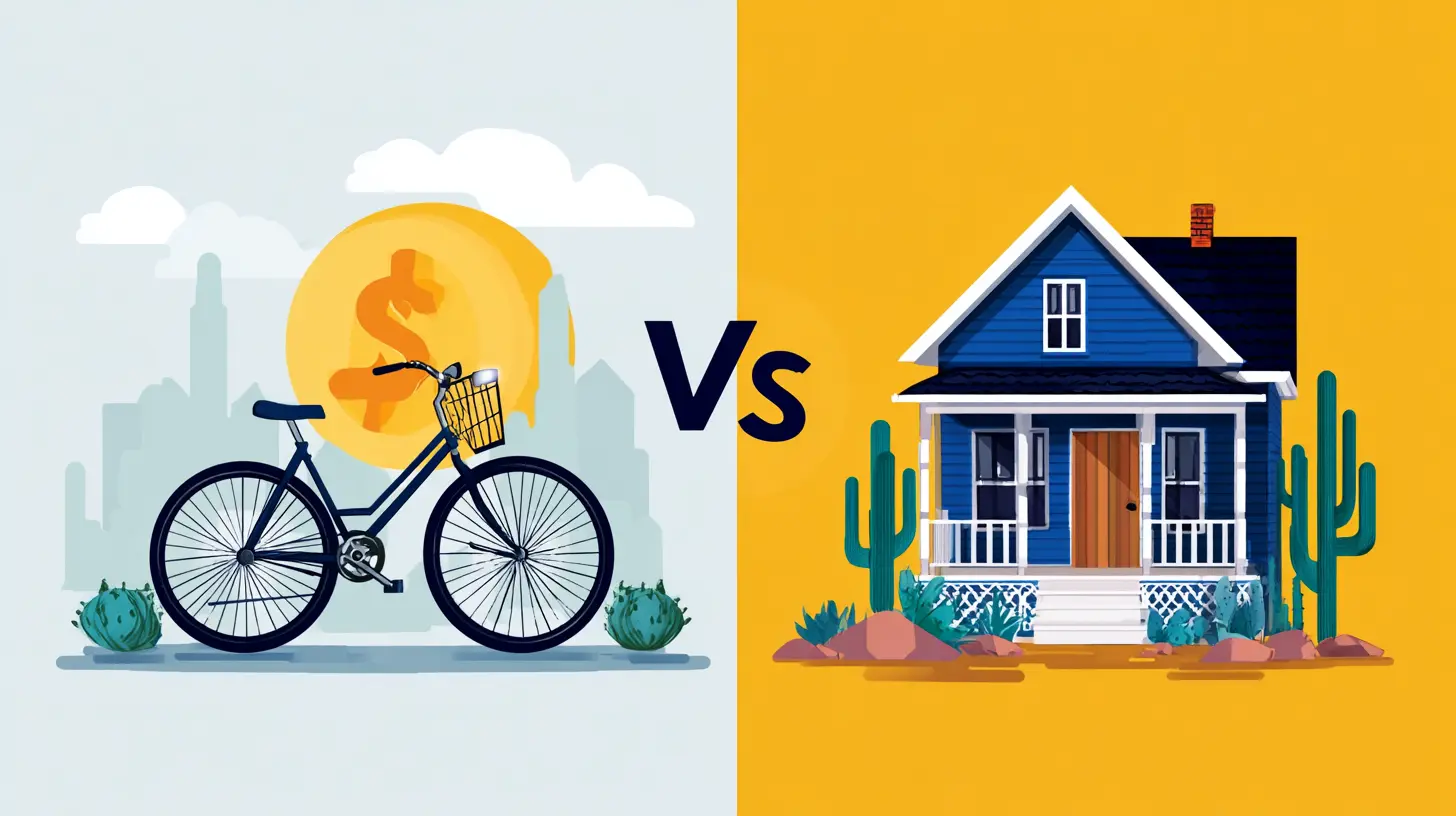
The Obvious Financial Comparison (and Why It Is Not Enough)
Let us start with the standard comparison. When you rent, you pay a fixed amount each month and receive a place to live. When you buy, you pay a mortgage, property taxes, insurance, and maintenance, and you build equity over time. The common argument for buying is that your monthly payment goes toward an asset you own, while rent disappears into someone else's pocket.That argument ignores a few important details. First, a mortgage payment includes interest, which is a real cost. In the early years of a 30-year loan, most of your payment goes to interest, not principal. Second, homeowners pay for repairs, replacements, and upkeep. A new roof can cost tens of thousands of dollars. A broken furnace is not the landlord's problem anymore. Third, property taxes and insurance premiums tend to rise over time, so your "fixed" housing cost is not actually fixed.
Renting, on the other hand, has its own hidden benefits. You know your maximum housing cost for the length of the lease. If the roof leaks, you make a phone call. If the neighborhood declines, you can leave when the lease ends. If you lose your job, you are not stuck with a mortgage and a property you cannot sell quickly.
The real financial question is not "which is cheaper per month" but "which gives you more flexibility and long-term wealth given your specific situation." For some people, buying builds wealth faster. For others, renting and investing the difference wins. The answer depends on how long you plan to stay, how much you can put down, and what the local market looks like.
The Five-Year Rule Is a Good Starting Point
You have probably heard that you should only buy a home if you plan to stay for at least five years. That rule exists for a reason. Buying a home involves significant upfront costs: the down payment, closing costs, inspection fees, appraisal fees, and moving expenses. When you sell, you pay real estate agent commissions, typically 5 to 6 percent of the sale price, plus any concessions you make to the buyer.If you sell after two years, those costs eat into whatever equity you have built. In many markets, you will actually lose money. The five-year window gives the property time to appreciate, and it gives you time to pay down enough principal that the transaction costs become less painful.
But the five-year rule is not a magic number. In a hot market where prices are rising quickly, you might come out ahead after three years. In a stagnant market, you might need seven or eight years just to break even. The rule is a useful sanity check, not a guarantee.
Before you buy, ask yourself a hard question: Can you honestly say there is a good chance you will still be living in this home five years from now? If the answer is "I am not sure," renting is probably the safer choice. Buying a home is a commitment, and treating it as a short-term investment is a gamble.

The Hidden Costs of Homeownership That Nobody Mentions
First-time buyers often focus on the down payment and the monthly mortgage. They forget about everything else. Let me list the costs that surprise people the most.Maintenance is the big one. A common rule of thumb is to budget 1 to 3 percent of the home's value per year for repairs and upkeep. On a 400,000 dollar home, that is 4,000 to 12,000 dollars annually. Some years you will spend nothing. Other years you will replace the HVAC system and the water heater at the same time. The key is to have a cash cushion ready.
Then there are the smaller costs that add up. Lawn care, snow removal, gutter cleaning, pest control, and basic tools. If you are handy, you can save money. If you are not, you will pay someone else. Window treatments, appliances, and furniture are also on you. A rental usually comes with blinds and a working stove. A house might have neither.
Property taxes are another surprise. They can increase every year, and in some areas they rise faster than inflation. Your mortgage payment can go up significantly even with a fixed interest rate, simply because the tax escrow adjusts. Many homeowners are shocked when their monthly payment jumps by 200 or 300 dollars after a reassessment.
Finally, there is the opportunity cost of your down payment. If you put 60,000 dollars into a home, that money is no longer earning interest or investment returns. In a strong stock market, that 60,000 could have grown substantially. Home equity is not liquid, and you cannot easily tap it without paying interest or selling the house.
The Hidden Benefits of Renting That Nobody Mentions
Renting gets a bad reputation, but it offers real advantages that go beyond not having to fix a toilet.Flexibility is the biggest one. If you rent, you can relocate for a job, move in with a partner, or downsize when the kids leave. You are not tied to a property that might be hard to sell. In a world where remote work and career changes are common, that flexibility has real value.
Renting also protects you from market downturns. If home prices drop 20 percent, homeowners lose equity. Renters just keep paying rent. If interest rates rise, homeowners with adjustable-rate mortgages feel the pain. Renters are unaffected. Your landlord bears the financial risk of the property, not you.
There is also the freedom from responsibility. When something breaks, you call the landlord. When the property needs maintenance, you do not have to arrange it or pay for it. For people with demanding jobs, young children, or limited handyman skills, this is a huge relief. The time you save on home maintenance can be spent on your career, your family, or your hobbies.
Renting can also let you live in a neighborhood you could not afford to buy in. If you want to live in a trendy urban area with great schools and walkable amenities, buying might be out of reach. Renting lets you enjoy that lifestyle without a massive down payment. You can also test a neighborhood before committing to it. Rent for a year, and if you love the area, then consider buying.
The Emotional Side of Owning a Home
Let us be honest about the emotional appeal of homeownership. There is something deeply satisfying about owning the place where you live. You can paint the walls any color you want. You can knock down a wall or build a deck. You have a sense of permanence and roots that renting does not provide.For many people, owning a home is a source of pride and stability. It feels like an achievement. It gives you a stake in your community. You are more likely to know your neighbors, join the local association, and care about local politics. That sense of belonging has real value, even if it is hard to quantify.
But the emotional side cuts both ways. Homeownership can also be a source of stress. The constant worry about maintenance, the fear of losing your job and falling behind on payments, the anxiety of watching your property value fluctuate. Some people thrive on that responsibility. Others find it exhausting.
If you are the type of person who loses sleep over a small crack in the foundation, renting might be better for your mental health. If you love working on projects and take pride in improving your space, buying might be the right move. There is no right answer, only the answer that fits your personality.
The Lifestyle Question: Where Do You Want to Be in Five Years?
This is the question that most financial advisors skip. They assume everyone wants to settle down and build a life in one place. But that is not true anymore.Young professionals might want to move cities every few years to advance their careers. Couples might want to try living in a different state before starting a family. Retirees might want to downsize or move closer to grandchildren. Renters can do all of these things easily. Homeowners cannot.
If you are in a period of life where change is likely, renting gives you the freedom to adapt. Buying locks you in. That lock-in can be a good thing if it forces you to stay put and build stability. But it can be a trap if your circumstances change and you are stuck with a house you cannot sell.
Think about your job security. If you work in an industry that is prone to layoffs or if your company might relocate you, renting is safer. Think about your family plans. If you might have children, move in with a partner, or care for an aging parent, your housing needs will change. Renting lets you adjust quickly. Buying requires a longer planning horizon.
The Investment Argument, Revisited
Proponents of buying often say that a home is your best investment. That is not always true. Historically, real estate appreciates at a rate that roughly tracks inflation, plus a little. In many markets, the annual appreciation is 3 to 5 percent. That is decent, but it is not spectacular compared to the stock market, which has historically returned 7 to 10 percent per year over the long run.The real financial advantage of buying is leverage. When you put 20 percent down on a home, you control 100 percent of the property. If the home appreciates 4 percent in a year, you earn 4 percent on the full value, not just on your down payment. That amplifies your returns. But leverage works both ways. If the home loses value, you lose a larger percentage of your down payment.
There is also the forced savings aspect. A mortgage payment includes principal, which builds equity. For people who struggle to save, that forced equity is a benefit. You are building wealth without having to think about it. Renting does not do that. You have to be disciplined enough to invest the difference between rent and a mortgage payment.
The problem is that many renters do not invest the difference. They spend it on nicer cars, dining out, and vacations. If you are not disciplined about saving, buying a home might be the better financial move simply because it forces you to build equity. But if you are a disciplined saver, renting and investing the difference can leave you wealthier in the long run.
Comparing the Numbers: A Realistic Example
Let us walk through a concrete example to see how the math works. Suppose you are looking at a home that costs 400,000 dollars. You have 80,000 dollars for a 20 percent down payment. Your mortgage rate is 6.5 percent on a 30-year fixed loan. Your monthly payment breaks down like this: principal and interest around 2,020 dollars, property taxes around 400 dollars, insurance around 150 dollars. That is roughly 2,570 dollars per month.Now add maintenance. At 1 percent of home value per year, that is 333 dollars per month. Your total cost of owning is about 2,900 dollars per month.
The same home might rent for 2,200 dollars per month. So renting saves you 700 dollars per month. If you invest that 700 dollars per month in a diversified stock fund earning 7 percent annually, after 30 years you would have roughly 850,000 dollars. That is a substantial amount.
But the homeowner also builds equity. After 30 years, the mortgage is paid off. The home might be worth 1.3 million dollars if it appreciates at 4 percent annually. The homeowner also has a paid-off place to live, which has value. But the homeowner also paid 333 dollars per month in maintenance, which over 30 years is about 120,000 dollars, plus property taxes that keep rising.
The point is not that one side wins. The point is that both sides can win. The renter who invests the difference can end up with a large portfolio. The homeowner who stays put for 30 years can end up with a paid-off asset. The right choice depends on your discipline, your time horizon, and your local market.
Common Mistakes Buyers Make
One of the biggest mistakes is buying too much house. Lenders will approve you for a mortgage that is far larger than what you can comfortably afford. Just because a bank says you qualify for 500,000 dollars does not mean you should borrow that much. A good rule is to keep your total housing costs, including taxes, insurance, and maintenance, below 30 percent of your gross income.Another mistake is skipping the home inspection to save money. A thorough inspection can reveal issues that cost thousands of dollars to fix. Pay the 400 dollars for the inspection. It is the cheapest insurance you will ever buy.
Many buyers also forget to budget for the move itself. Moving trucks, boxes, new furniture, and small repairs add up quickly. Set aside at least 2,000 dollars for moving costs, and more if you are moving into a larger space.
Finally, do not buy a home just because your friends are buying. Peer pressure is a terrible financial advisor. Your friends might have different income levels, different job security, and different plans. Make your decision based on your own situation.
Common Mistakes Renters Make
Renters make mistakes too. The biggest one is not saving for a down payment. Even if you plan to rent for the next ten years, you should still be saving money. The day might come when you want to buy, and having a down payment ready gives you options.Another mistake is renting more space than you need. A two-bedroom apartment might be nice, but if you only need one bedroom, the extra money could be invested. Similarly, renting in a trendy neighborhood is fun, but you might be paying a premium for a location you barely use.
Some renters also fail to read their lease carefully. Understand the terms for breaking a lease, the rules on subletting, and the process for getting your security deposit back. A little knowledge can save you hundreds of dollars.
Finally, do not assume that renting is always cheaper than buying. In some markets, especially in the Midwest and parts of the South, buying is cheaper than renting on a monthly basis. Run the numbers for your specific area before you decide.
The Case for Doing Both
There is a middle path that many people overlook. You can rent your primary residence and own an investment property. This gives you the flexibility of renting while still building real estate wealth. You can buy a duplex, live in one unit, and rent out the other. Or you can buy a rental property in a different city and manage it remotely.This approach is more complex, but it can be very effective. You get the tax benefits of real estate investing, the cash flow from rent, and the flexibility to move when you want. The downside is that being a landlord is work. You have to deal with tenants, maintenance, and vacancies. If you are not prepared for that, stick with one path.
How to Decide: A Practical Framework
If you are torn between renting and buying, here is a practical way to think about it.First, write down your plans for the next five years. Be honest about your career, your relationships, and your desire to stay in one place. If there is a good chance you will move, rent.
Second, calculate your total cost of ownership, not just the mortgage. Include taxes, insurance, maintenance, and the opportunity cost of your down payment. Compare that to the rent for a similar place. If the gap is small, buying might make sense. If the gap is large, renting and investing the difference is smarter.
Third, consider your personality. Are you comfortable with uncertainty and DIY projects? Do you have the time and energy to maintain a home? If not, renting is the better fit.
Fourth, look at the local market. In some cities, prices are so high that buying makes little sense. In others, prices are low enough that buying is a no-brainer. Talk to a local real estate agent and a local financial advisor to get a sense of the market.
Finally, remember that this is not a permanent decision. You can rent now and buy later. You can buy now and sell later. The key is to make a choice that gives you financial stability and personal happiness today, not one that you regret in a few years.
The Bottom Line
Renting vs buying is not a battle between good and evil. It is a choice between two valid ways of living. Buying offers stability, equity, and a sense of ownership. Renting offers flexibility, freedom, and lower risk. The right answer depends on your financial situation, your career plans, your family goals, and your personality.Do not let anyone pressure you into buying a home if you are not ready. And do not let anyone shame you for renting if it is the right choice for your life. The best financial decision is the one that lets you sleep at night and move forward with confidence. Whether you rent or buy, the most important thing is to make the choice deliberately, with your eyes open to both the costs and the benefits.
all images in this post were generated using AI tools
Category:
Renting Vs BuyingAuthor:

Julia Phillips
Discussion
rate this article
2 comments
Skyler McKinney
Deciding between renting and buying is like choosing between a cozy sweater and a tailored suit. Both have their perks, but one might have you feeling a bit too snug when the bills come. Just remember, whether you're a renter or an owner, make it work for you!
August 28, 2026 at 3:26 AM
Julia Phillips
That's a great analogy! It's all about finding what fits you best, both in comfort and in your budget.
Blade Edwards
In the dance of dollars and dreams, renting offers freedom's fleeting grace, while buying roots your heart to a place, each choice a life's embrace.
August 27, 2026 at 4:03 AM
Julia Phillips
That's a beautiful way to capture the essence of the choice. Each path holds its own unique journey.