Salvaging the $1.3 Trillion: Climate Finance in a New Geopolitical Paradigm
August 7, 2026 - 22:49
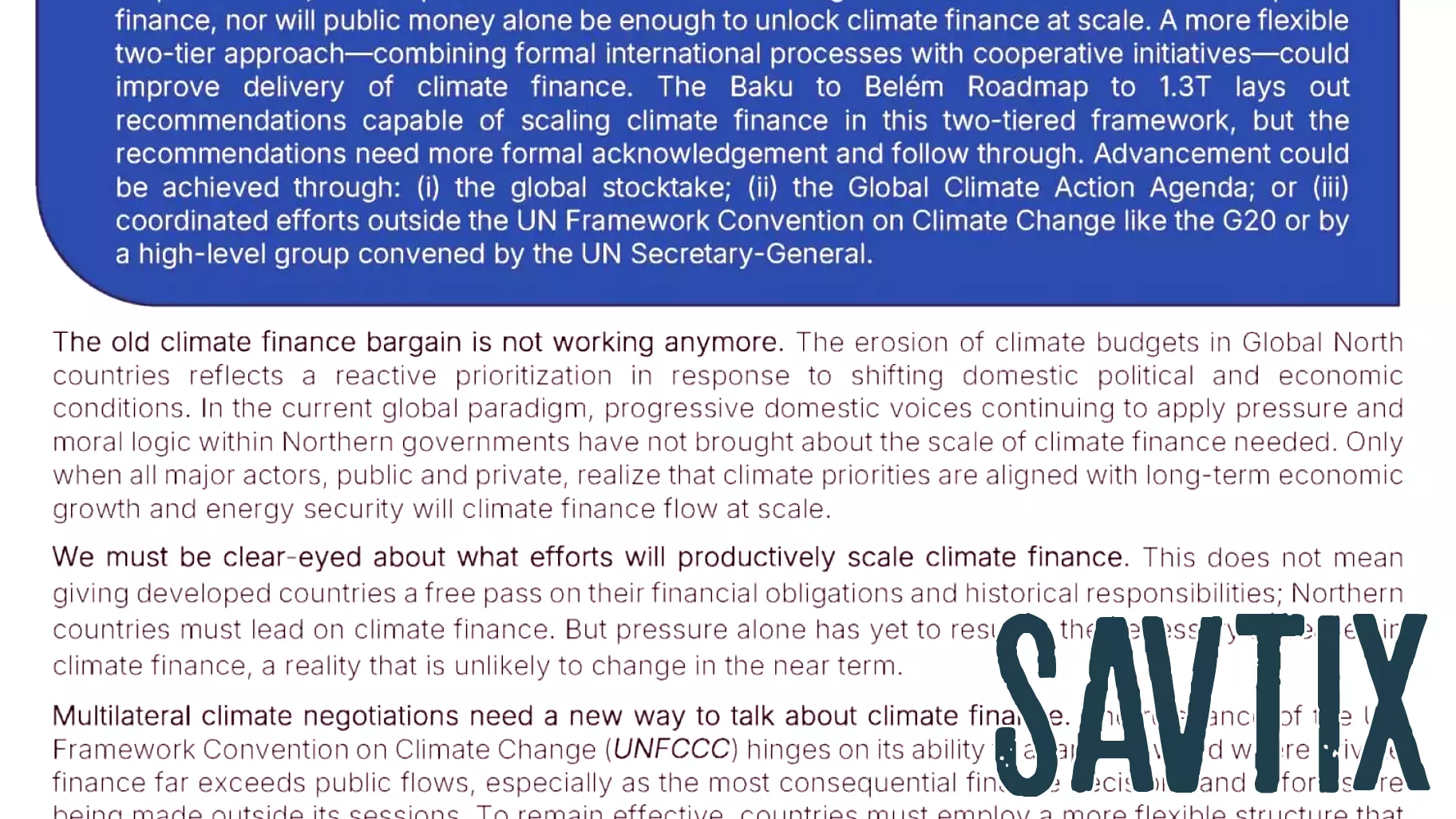
The old climate finance bargain is not working anymore. The promise of $1.3 trillion in annual support for developing nations, first floated as a headline number at past summits, now sits awkwardly against a backdrop of fractured trade alliances, rising defense spending, and a donor base that is increasingly reluctant to write blank checks. The question is no longer whether the money will flow, but whether the entire framework can survive contact with a new geopolitical reality.
For years, the logic was simple: rich countries, responsible for most historical emissions, would pay poorer ones to leapfrog fossil fuels. That compact assumed stable budgets, shared climate goals, and a common understanding of fairness. All three assumptions have eroded. Major economies are now redirecting capital toward domestic industrial policy and border security. Meanwhile, emerging economies are demanding that the money be treated as compensation, not charity, and they are pushing back against conditions attached to loans and grants.
The result is a stalled negotiation. The $1.3 trillion figure, originally a collective target for 2035, was never backed by a clear delivery mechanism. Private capital, expected to cover most of the gap, is not moving at the required speed. Investors cite currency risk, weak project pipelines, and political instability. Public finance, stretched thin, cannot make up the difference. And with the United States and several European governments signaling a pivot away from multilateral climate commitments, the burden is falling on a shrinking group of middle-income countries.
Some experts argue that the solution is not to chase the same number but to redesign the instruments. That means more blended finance, where public funds absorb first losses to attract private money. It means regional carbon markets that do not depend on Western buyers. And it means letting developing countries define their own green growth paths, even if those paths include natural gas as a bridge fuel. The old model treated climate finance as a moral obligation. The new one will have to treat it as a strategic investment, or it will not happen at all.
The next climate summit will test this shift. But the real action is happening outside the formal talks, in bilateral deals, development bank reforms, and local green bond markets. The trillion-dollar pledge was always a political symbol. Salvaging it now requires accepting that the symbol has changed meaning, and that the money will only move when it serves the interests of both sides.
MORE NEWS
September 22, 2026 - 02:21
Rethinking How Outside Scholarships Affect Financial AidStudents who earn outside scholarships often expect that money to reduce the burden of college costs. At many schools, however, that is not what happens. Instead, the financial aid office treats...
September 21, 2026 - 13:01
Fuel Support Programs Spread as Energy Costs Strain BudgetsMore than 90 countries now offer some form of consumer support for fuel costs, a sharp increase that reflects how deeply rising energy prices have reshaped government budgets worldwide. The...

September 20, 2026 - 22:10
Dutch Bros and McDonald's Both Hit 52-Week Lows, but Only One Looks Like a BuyTwo restaurant chains found themselves at the bottom of their yearly trading ranges on the same day, yet the reasons behind each decline point in very different directions. McDonald`s has been...

September 20, 2026 - 07:14
IBM Stock Could Rise in Five Years, But Buying Today Is Still a Hard SellInternational Business Machines has spent the past year testing the patience of its shareholders. After a brutal 2026 that erased a significant chunk of market value, the company now faces a...